

PHOTOGRAPHY GUIDE
Forest Photography: Finding Mood and Atmosphere Among Trees
Learn how fog, weather, light and composition can transform chaotic woodland scenes into atmospheric forest photographs.
Introduction
Forest photography is one of the most challenging and rewarding forms of landscape photography.
Unlike mountains or coastlines, forests rarely offer obvious compositions. Instead, photographers are faced with layers of trees, changing light and endless visual complexity.
Over the years, I have found that the most compelling woodland photographs are rarely about documenting a place. They are about atmosphere — the combination of weather, light and mood that transforms an ordinary scene into something memorable.
In this guide, I share some of the techniques, observations and field experiences that have helped me simplify woodland scenes and create more atmospheric forest photographs.
Why Forest Photography Is So Challenging
Many photographers arrive in a forest expecting to find a perfect composition immediately. Instead, they are often faced with visual chaos.
Trees intersect with one another. Bright patches of light draw attention away from the subject. Fallen branches, leaves and undergrowth create distractions throughout the frame.
The solution is rarely to include more.
It is usually to include less.
Strong forest photography often comes from identifying a single subject, a relationship between trees, or a particular mood created by light, fog, weather or seasonal conditions.
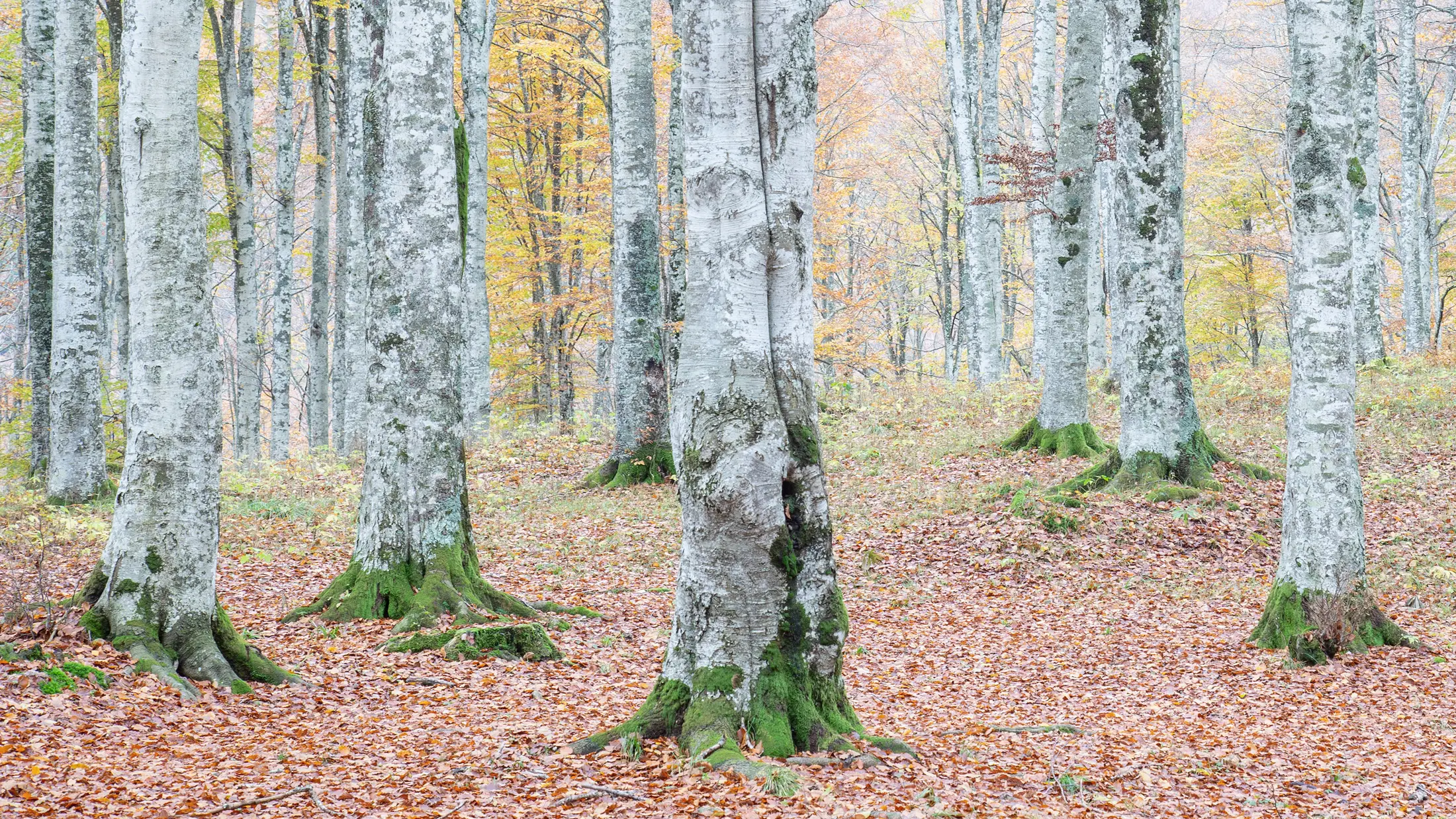
Weather Is More Important Than Location
One of the biggest misconceptions in landscape photography is the belief that great images depend on famous locations.
In forest photography, weather often matters far more than the location itself.
A world-famous forest photographed under harsh midday sunlight may produce ordinary images. Meanwhile, an anonymous woodland photographed during fog or soft rain can become extraordinary.
When conditions are right, even the most ordinary forest can reveal something special.
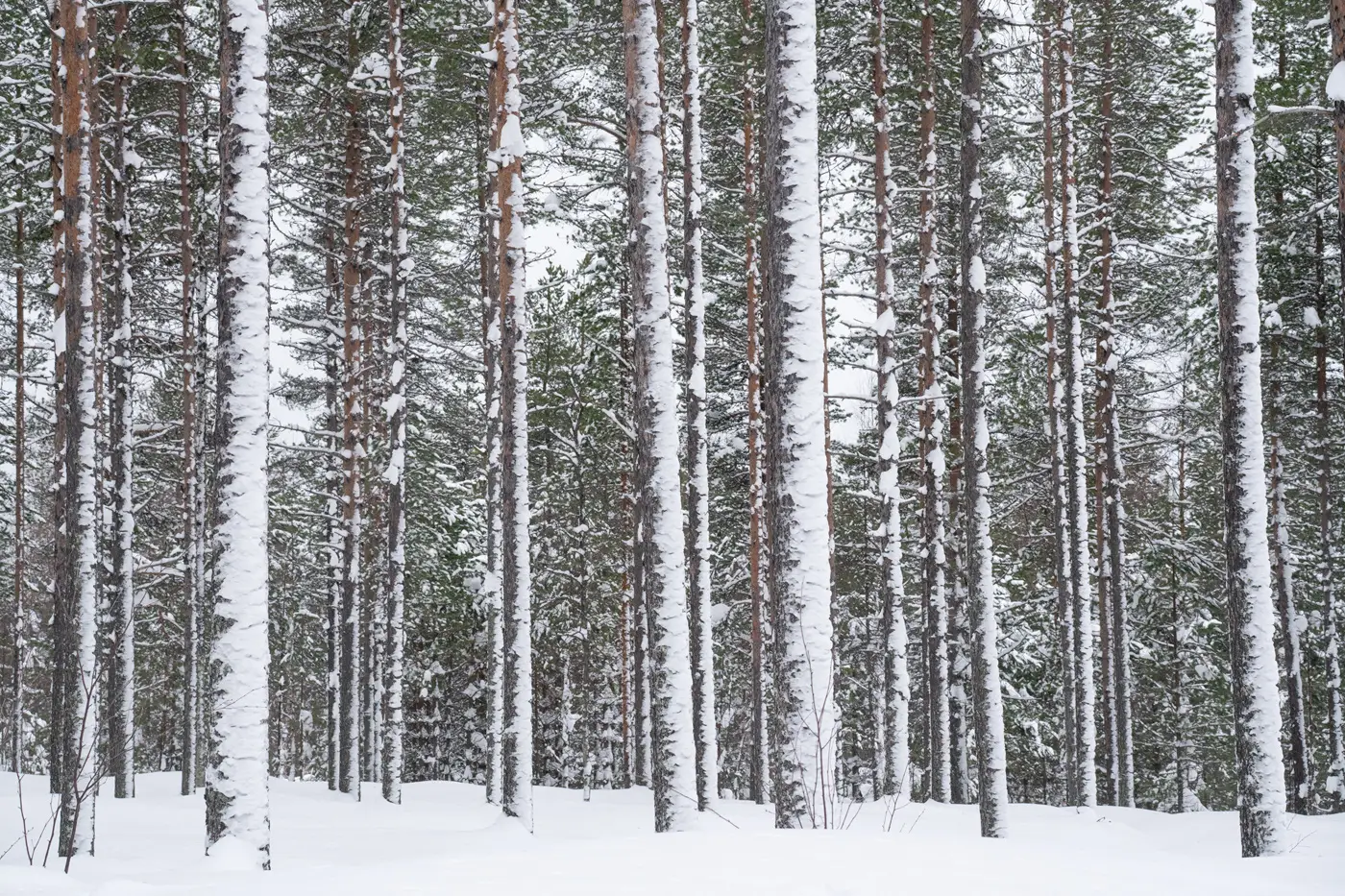
Many of my favourite photographs were created during weather that most visitors would consider unpleasant.
- Fog.
- Rain.
- Drizzle.
- Low clouds.
The Magic of Fog in Forest Photography
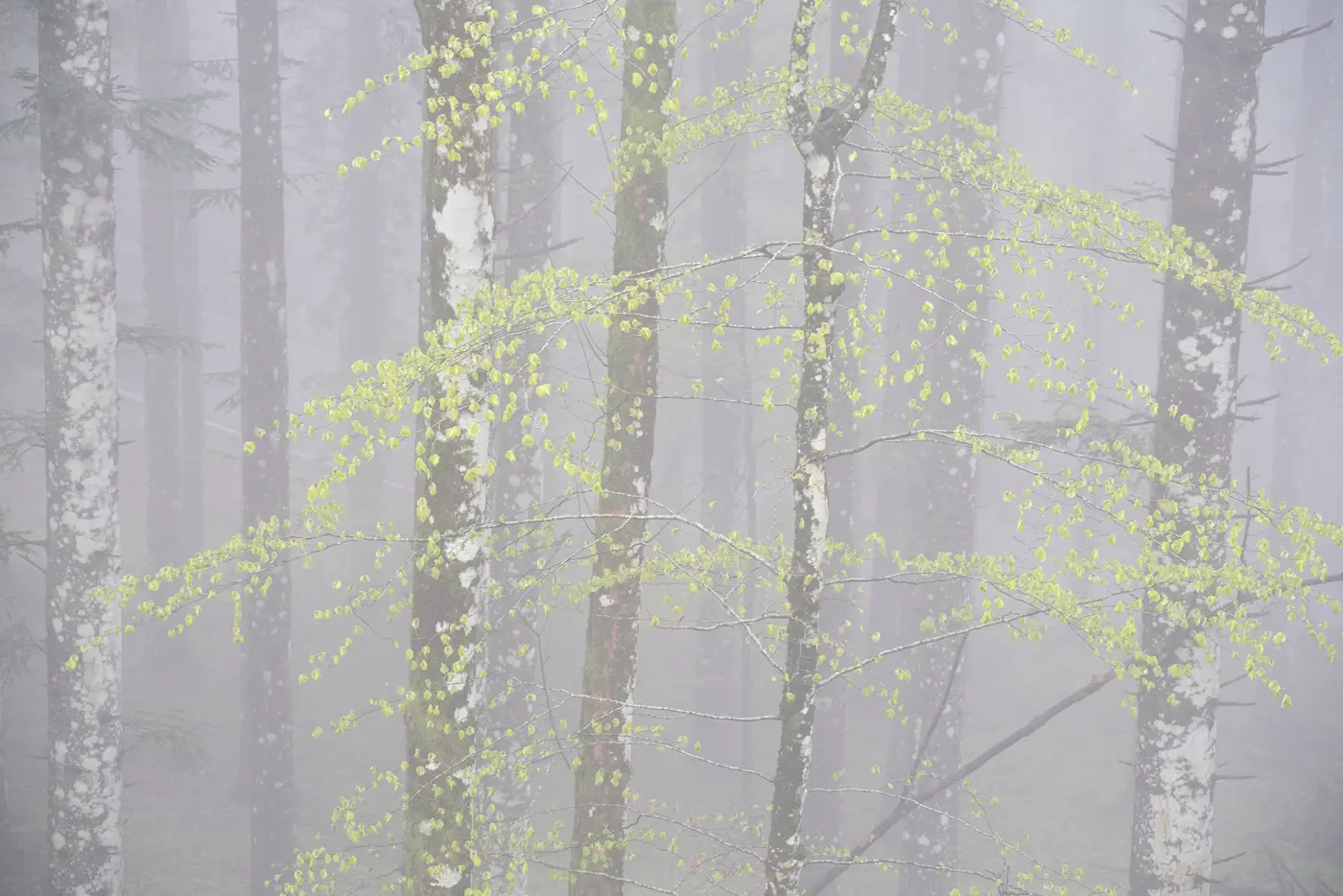
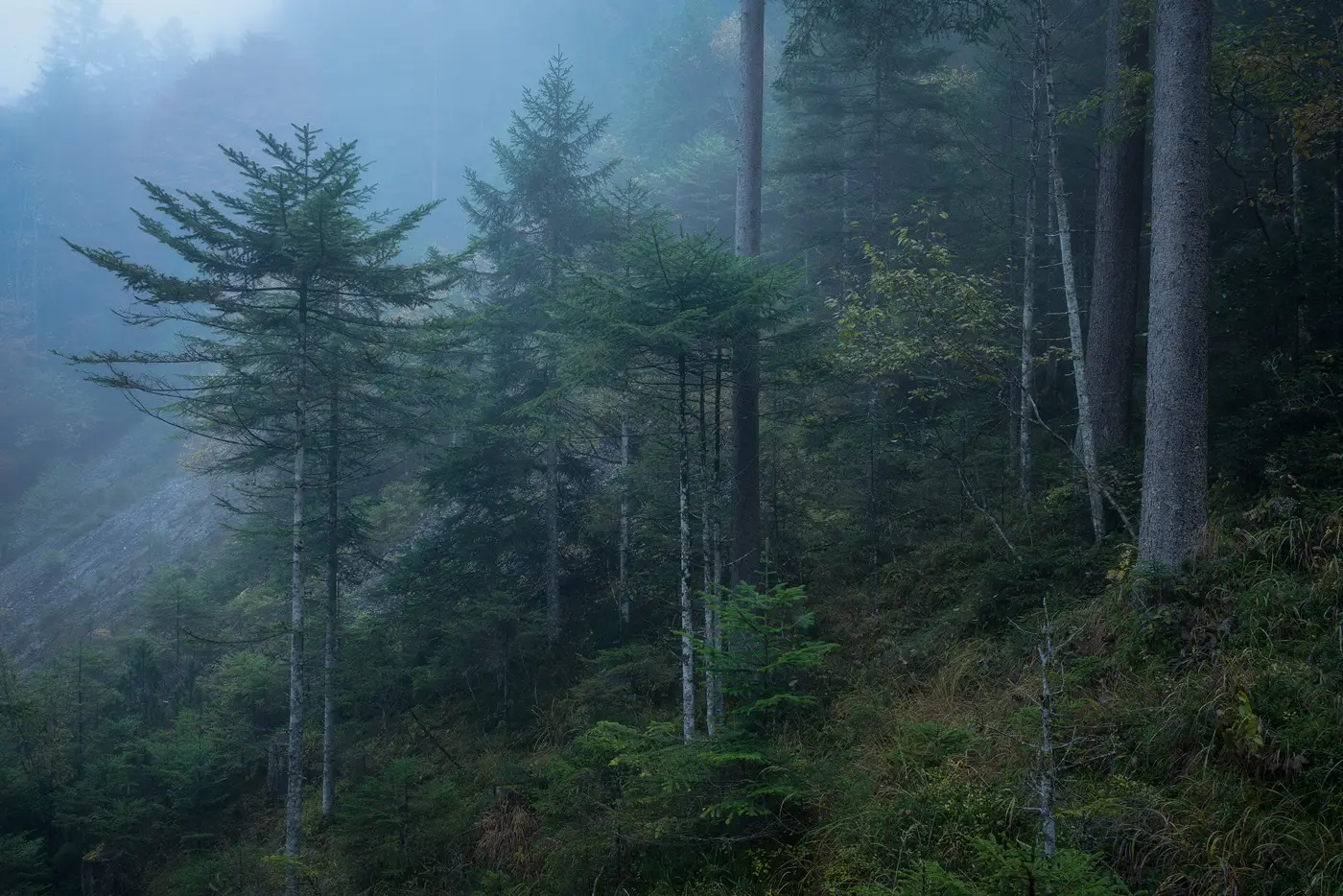
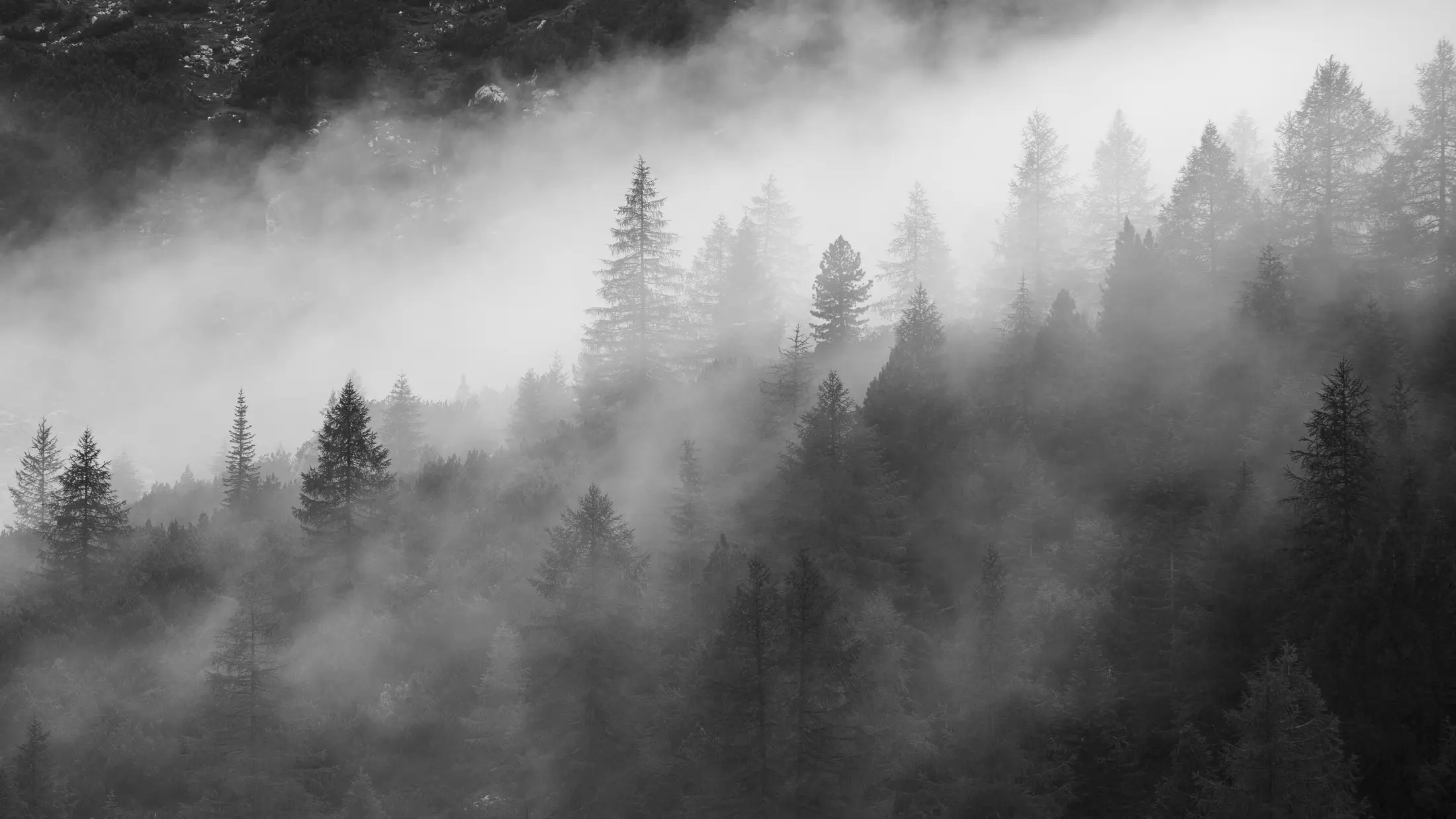
If there is one condition that can completely transform a woodland scene, it is fog.
Fog is perhaps the most valuable tool available to forest photographers.
Instead of recording every detail, fog removes information.
It simplifies.
It separates layers.
It creates depth.
It introduces mystery.
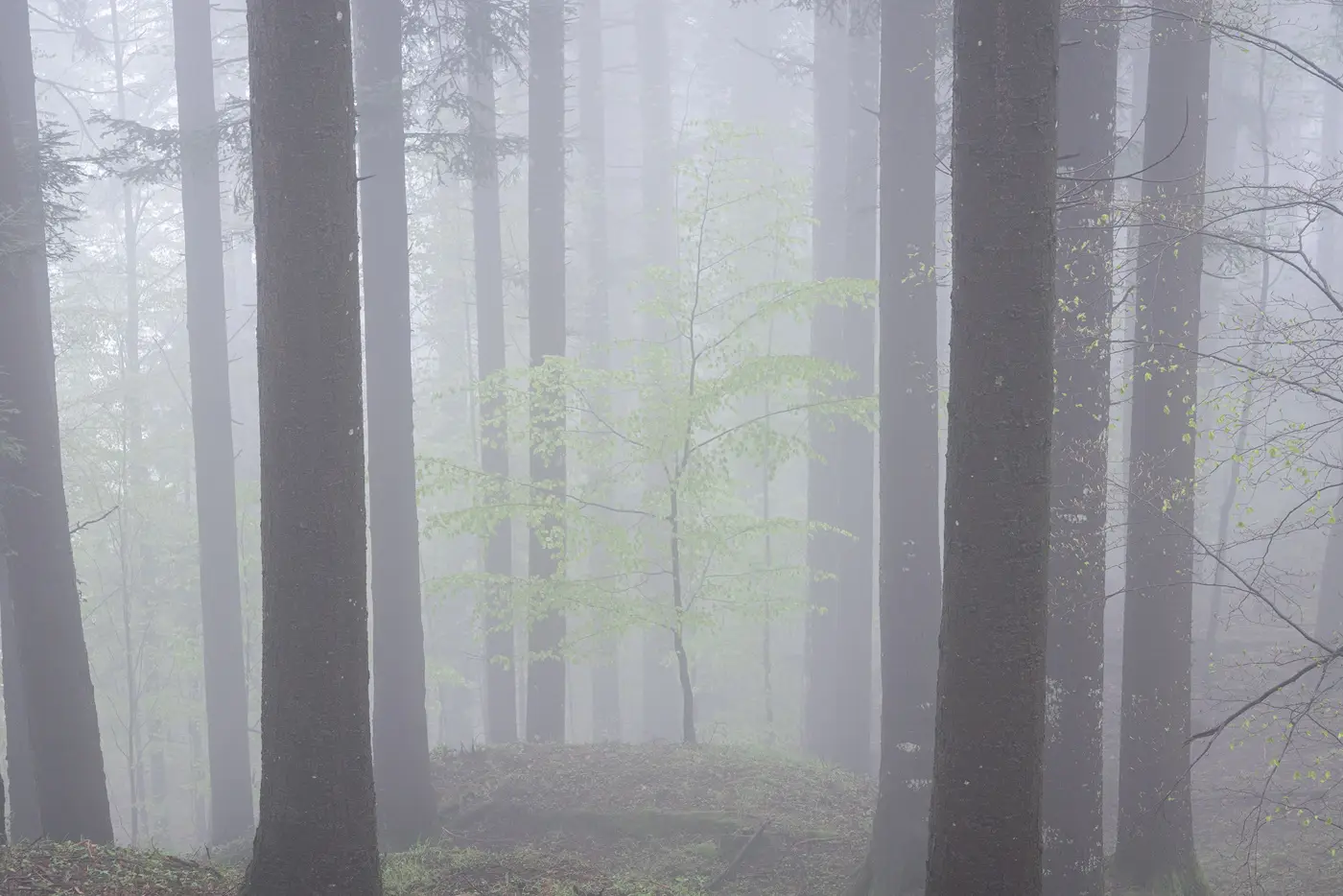
Distant trees gradually disappear into the mist, allowing the viewer’s eye to focus on the most important subjects within the frame.
This is one of the reasons why atmospheric forest photography often feels more emotional than images made in clear conditions.
The viewer is invited to imagine what lies beyond the visible scene.
Looking for Character Instead of Size
Many photographers search for the biggest trees.
The tallest trees.
The oldest trees.
While impressive subjects certainly have value, character is often more important than size.
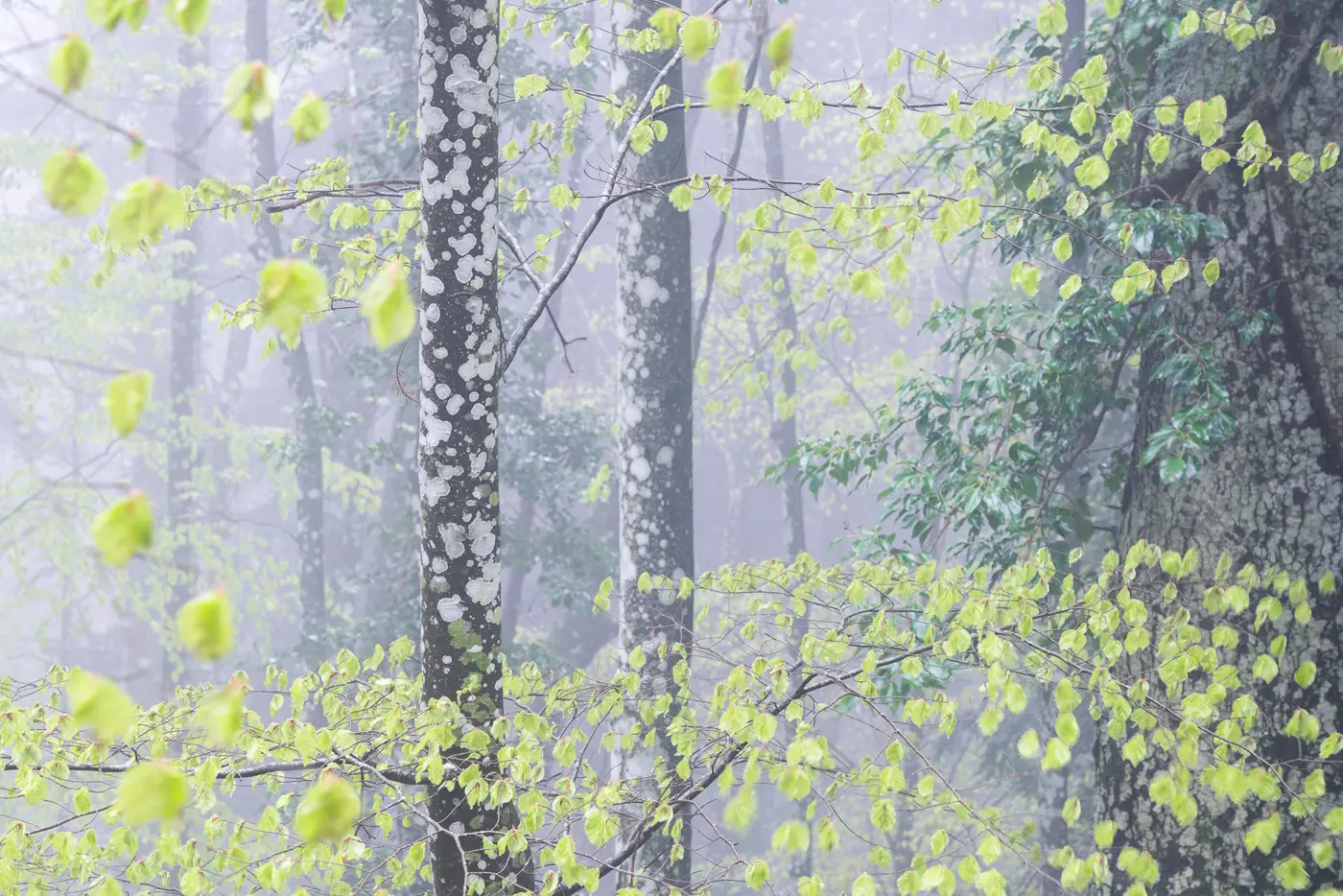
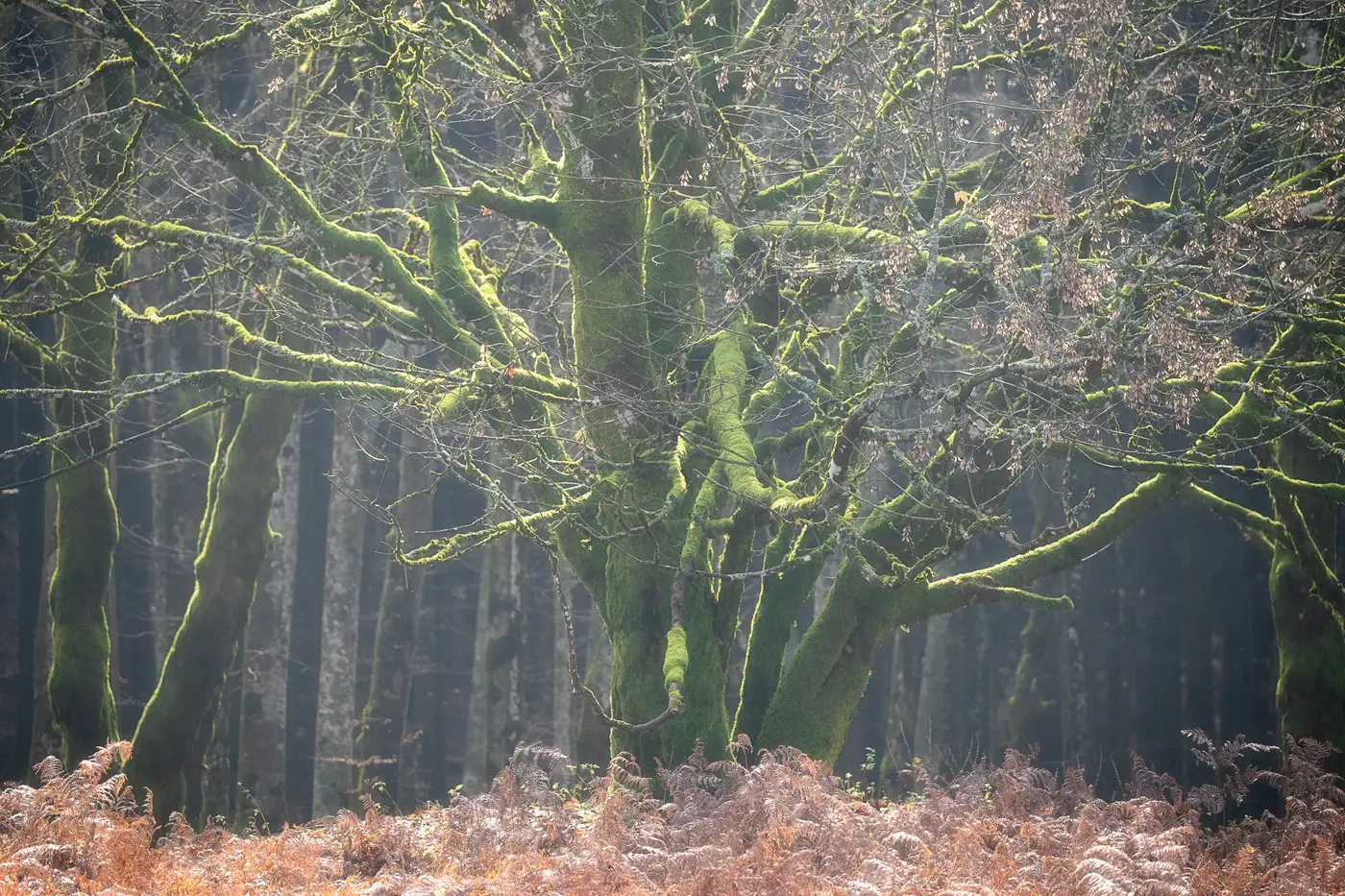
An isolated tree with an unusual shape may create a stronger photograph than an entire forest of larger specimens.
When photographing trees, I often look for visual personality rather than scale.
Interesting subjects might include:
- twisted trunks
- unusual branching structures
- isolated trees
- repeating shapes
- old trees showing signs of age
- distinctive silhouettes
- relationships between multiple trees
These elements help create photographs that feel intentional and memorable.
Rather than documenting a location, they help tell a visual story.
Woodland Photography Composition Tips
Composition in forests requires a different mindset compared to many other forms of landscape photography.
Instead of searching for grand vistas, woodland photography often benefits from a more intimate approach.
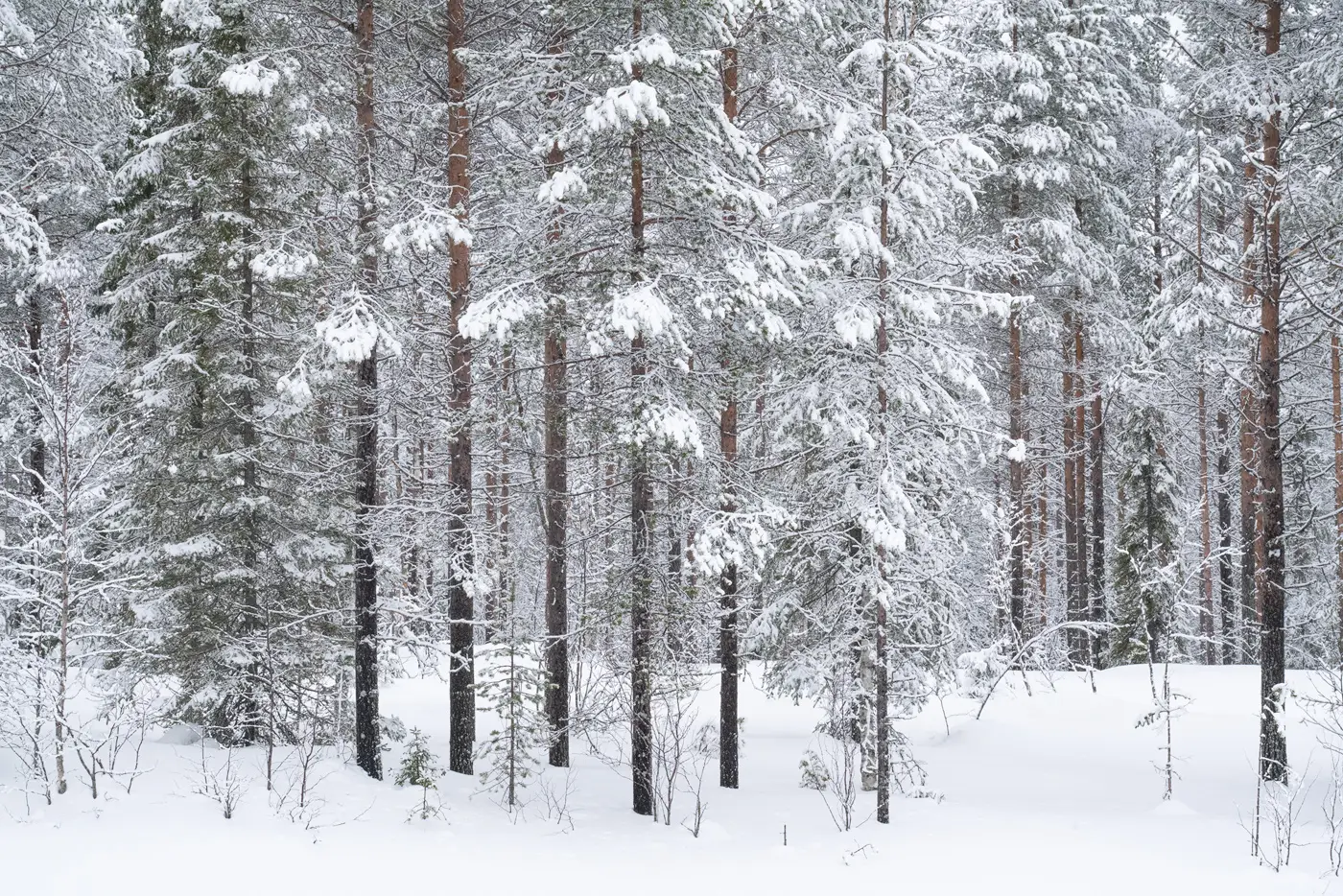
Successful woodland photography composition is usually built around simplicity.
Ask yourself one question:
“What is the subject?”
If the answer is unclear, the photograph will often feel confusing.
Possible subjects might include:
- a single tree
- a group of similar trees
- a path leading into the forest
- an opening in the woodland
- a shaft of light
- an area of contrasting colour
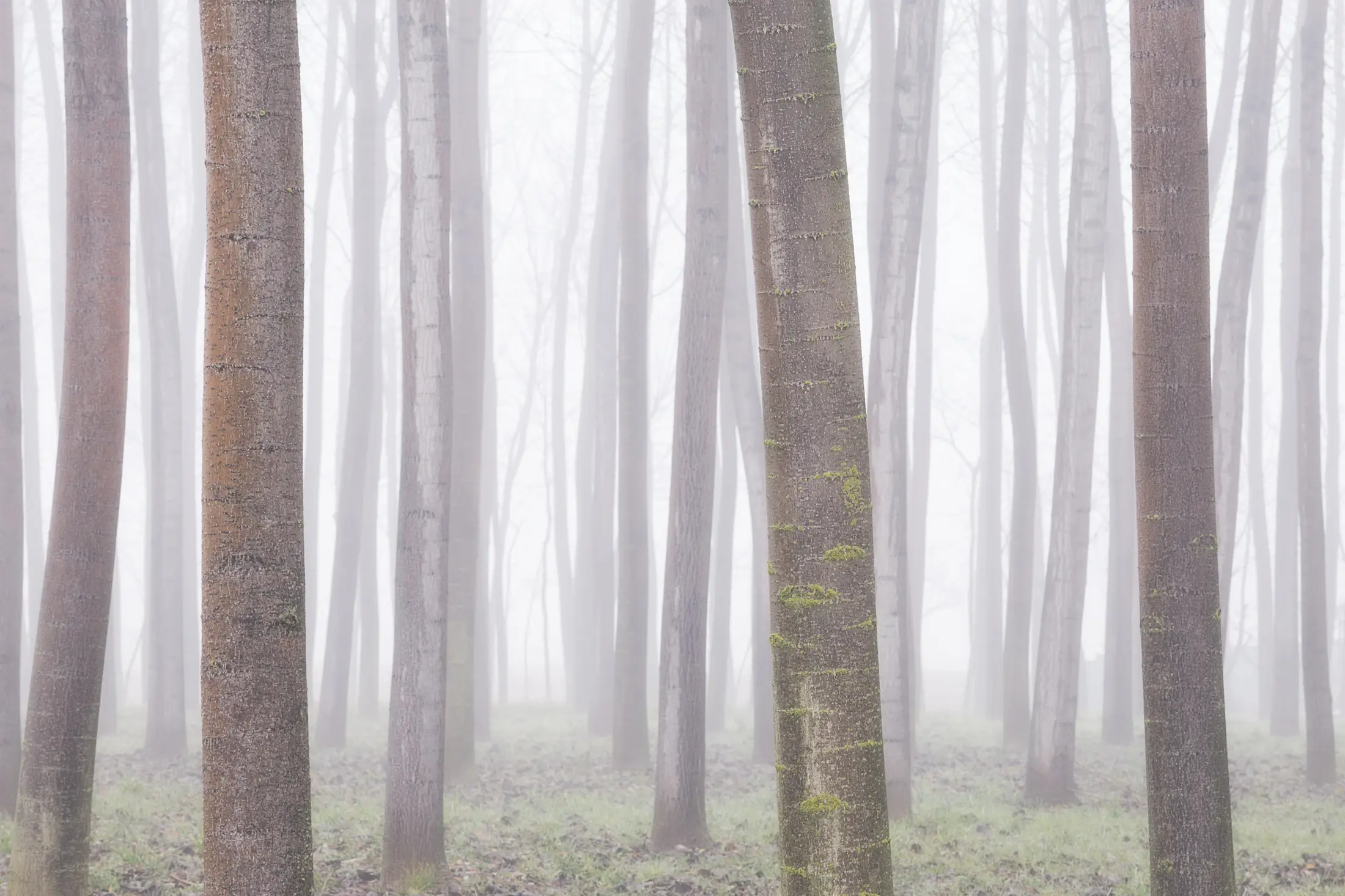
Why Telephoto Lenses Often Work Better
Many photographers automatically reach for wide-angle lenses when photographing landscapes.
Forests are different.
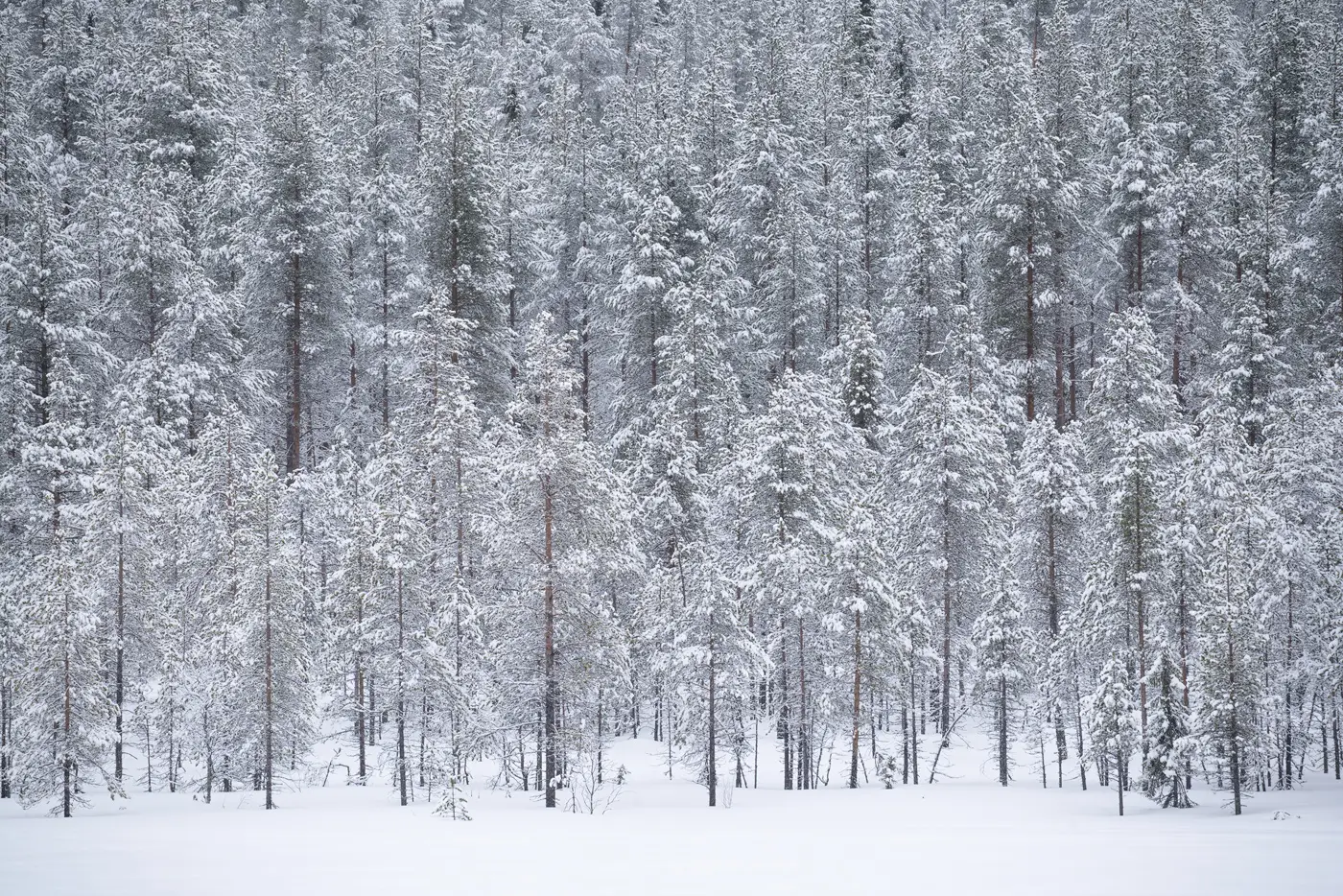
While wide-angle lenses can certainly be effective, many of the strongest forest photographs are created using telephoto lenses.
Focal lengths between 70mm and 200mm are particularly useful.
These longer focal lengths allow photographers to isolate subjects and remove unwanted distractions.
They compress layers of trees and simplify complex scenes.
In many situations, a telephoto lens can reveal compositions that are completely invisible with a wider perspective.
Some of my favourite woodland photography techniques involve slowly scanning through a forest using a telephoto lens, searching for patterns, shapes and relationships between trees.
The process often feels more like observation than photography.
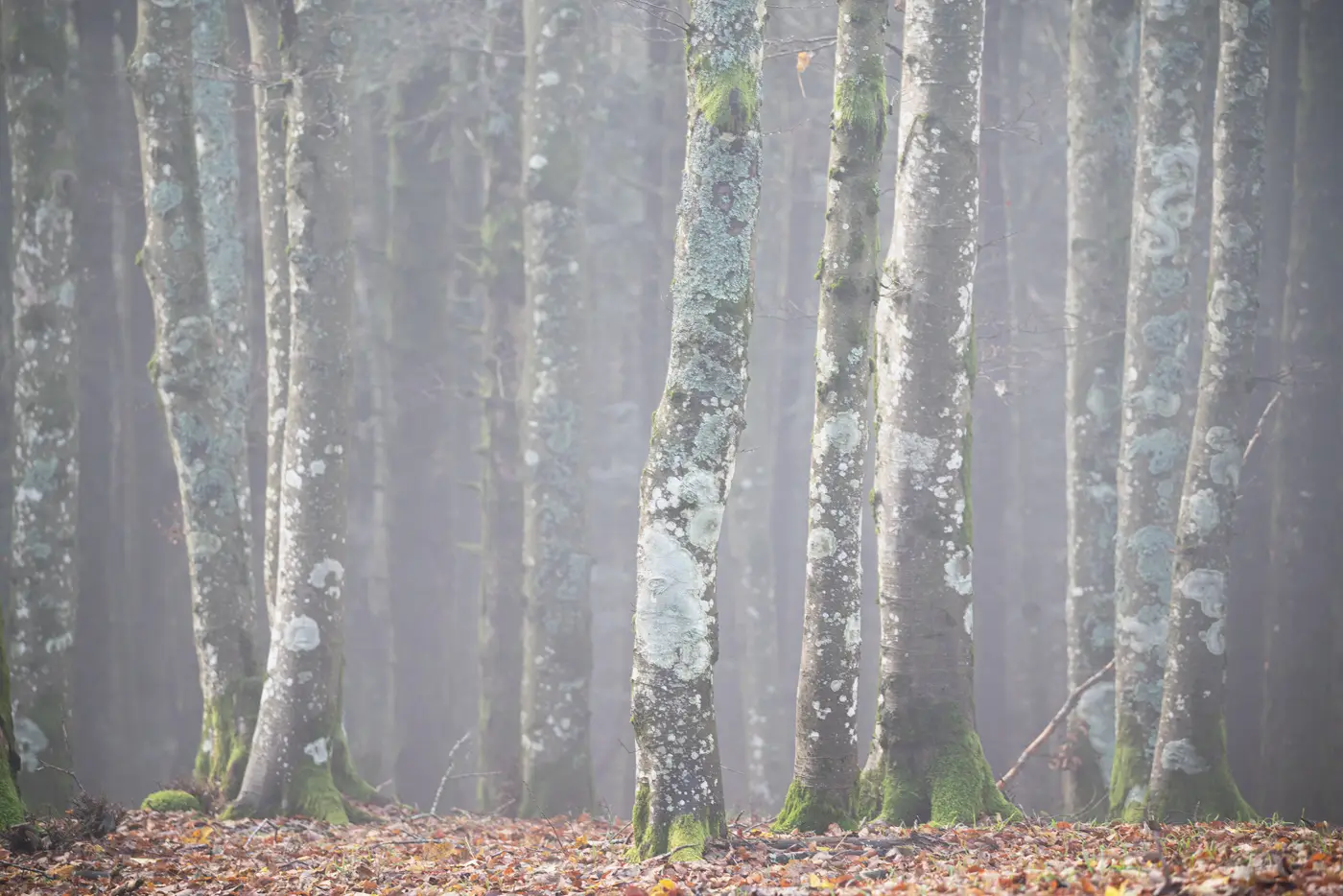
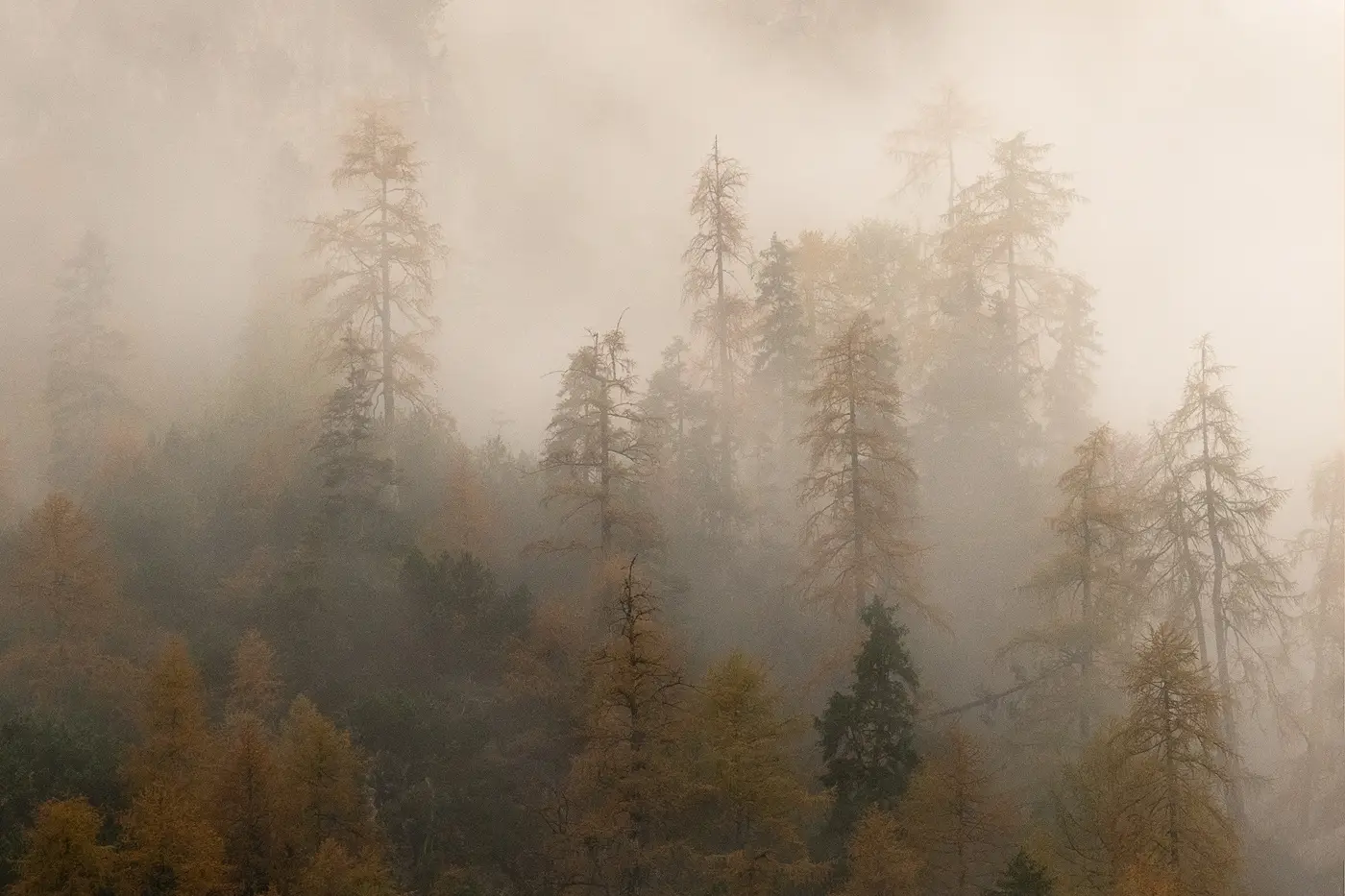
The Importance of Light
Light remains one of the most important ingredients in any landscape photograph.
In forests, however, subtle light often works better than dramatic light.
Soft overcast conditions provide even illumination and help preserve detail throughout the scene.
Low-angle light during early morning or late evening can create beautiful depth when it filters through the trees.
Occasionally, shafts of sunlight breaking through fog can create extraordinary opportunities.
These moments are often brief.
They may last only a few seconds.
Learning to recognise and anticipate these conditions is one of the most rewarding aspects of forest landscape photography.
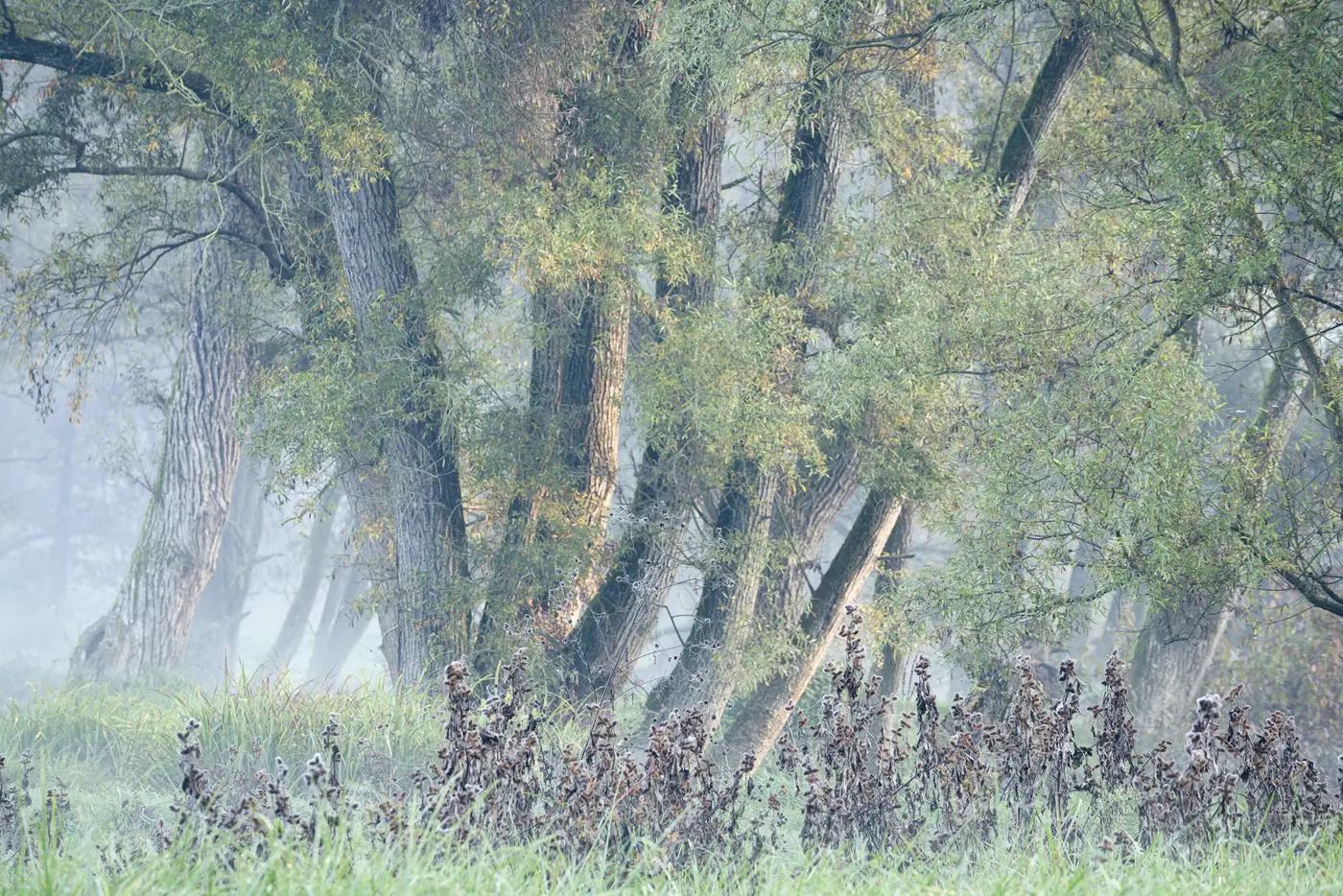
Seasonal Opportunities Throughout the Year
One of the greatest advantages of photographing forests is that they offer opportunities during every season.
Spring
Fresh leaves emerge and vibrant greens begin to dominate the landscape.
Soft light and frequent moisture create excellent conditions for woodland photography.
Summer
Dense foliage creates opportunities for intimate scenes and abstract compositions.
Patterns, textures and details become increasingly important.
Autumn
Autumn is often considered the most popular season for forest photography.
Colour becomes a dominant element, creating strong visual contrast and emotional impact.
Misty autumn mornings can produce exceptional conditions for atmospheric forest photography.
Camera Settings for Forest Photography
There are no perfect camera settings for every situation.
However, a few general principles can be helpful.
- Use a tripod whenever light levels are low.
- Keep ISO as low as practical.
- Focus carefully on the primary subject.
- Consider focus stacking when depth of field becomes important.
- Use a polarising filter to reduce reflections on wet leaves and bark.
- Avoid excessive sharpening during post-processing.
Ultimately, technical settings matter less than atmosphere, composition and light. A technically perfect photograph without atmosphere will rarely leave a lasting impression.
Common Forest Photography Mistakes
Including Too Much
Trying to photograph the entire forest often creates confusion.
Simplification is usually the answer.
Ignoring Weather
Many photographers stay home when conditions appear poor.
Some of the best forest photography opportunities occur during fog, rain and overcast conditions.
Chasing Famous Locations
Atmosphere almost always matters more than location.
An ordinary woodland with exceptional conditions can outperform a famous destination.
Photographing Without a Subject
Every image should contain a clear visual anchor.
Without one, viewers often struggle to understand what the photograph is about.
Overprocessing
Forests already contain enormous visual complexity.
Heavy editing often adds even more confusion. Subtle post-processing usually produces stronger and more timeless results.
Final Thoughts
Forest photography is less about documenting trees and more about revealing atmosphere.
The most memorable images often emerge when weather, light and composition come together to create something that feels emotional rather than descriptive.
A forest may initially appear chaotic.
But with patience, observation and careful simplification, it becomes one of the most rewarding subjects in landscape photography.
The goal is not to show every tree.
The goal is to reveal the feeling of being there.
And sometimes, that feeling appears only for a few seconds before disappearing back into the mist.
About the Author
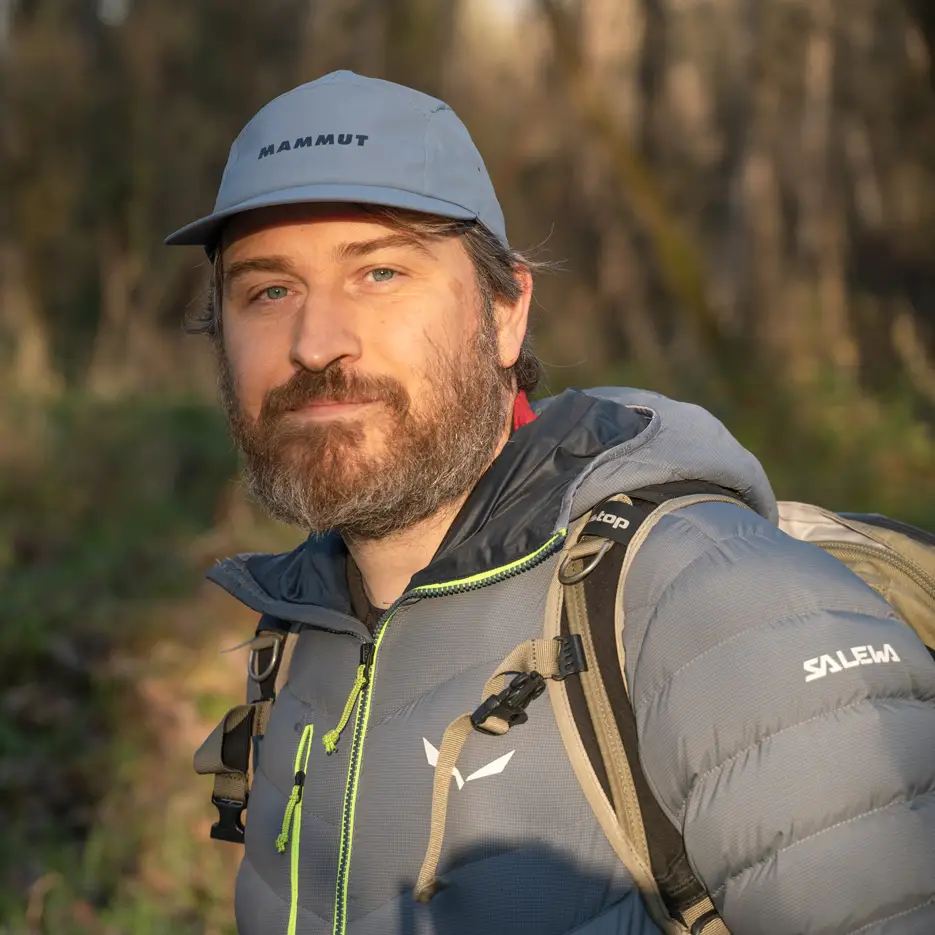
Federico Antonello is an Italian landscape photographer, certified hiking guide and licensed tour leader based near the Dolomites.
His photography focuses on atmosphere, changing light and quiet landscapes rather than iconic viewpoints alone. Through years of exploring forests, mountains and remote locations across Europe, he has developed a personal approach built around observation, patience and composition.
These Field Notes are based entirely on first-hand experience in the field, combining practical guidance with the creative process behind each image.
Continue Exploring
Further guides, stories and photography insights from the field.
STAY INSPIRED
Photography Insights Delivered Occasionally
Receive occasional field notes, photography insights, free resources and updates about future tours.
No spam. Just thoughtful content from the field.
FREE RESOURCES
Free Guides & Downloads
A growing collection of photography guides,
destination insights and practical resources
created from years spent exploring landscapes worldwide.
Dolomites Photography Guide
Light, seasons, iconic locations and practical advice for photographers exploring the Dolomites throughout the year.
COMING SOON →
Aurora Photography Guide
Camera settings, forecasting tools, composition tips and practical advice for planning and photographing the Northern Lights.
COMING SOON →
Chasing Mood & Atmosphere
A practical guide to finding fog,
weather, light and atmospheric conditions
for landscape photography.
COMING SOON →
Landscape Trip Planning
Learn how to plan your photography trips using weather forecasts, maps, light and practical preparation for the best shooting opportunities.


