

Field Notes / Destination Guides
Best Places to Stay in the Dolomites for Hiking
Compare eleven bases by the hikes you want to do, with advice on lifts, seasonal access and travelling without a car.
Explore the BasesIntroduction
Choose your Dolomites base around the hikes you most want to do. Two trailheads that look close on a map can be separated by a pass, a valley drive or a lift that opens later than you need. This matters especially for an early start or a photography outing at sunset.
Cortina d’Ampezzo suits Sorapis, Cinque Torri and Croda da Lago. Misurina is a focused base for Tre Cime, the Cadini and the two nearby lakes. Choose Dobbiaco for Puster Valley transport and Braies, Ortisei for Seceda and Alpe di Siusi, or San Martino di Castrozza for the Pale.
Group your trailheads by valley before looking for a room. Check the exact starting point, the first and last connections, and any road or lift restrictions for your dates.
Match bases to your hikes · Plan without a car · Decide how many nights
Compare all 11 bases
At a glance
| Where to stay | Hikes and trailheads | Without a car? | Character |
|---|---|---|---|
| Cortina d’Ampezzo | Sorapis / Tre Croci, Cinque Torri / Bai de Dones, Giau, Federa | Possible, but verify individual bus links | Famous eastern hub |
| Misurina | Tre Cime via Rifugio Auronzo, Cadini, Lago d’Antorno and Lago di Misurina | Local walks and seasonal buses. Check access and reservations for Rifugio Auronzo. | Focused base near Tre Cime |
| San Vito di Cadore | San Marco / Scotter, local Antelao and Pelmo views, Cortina day trips | More limited for dispersed trailheads | Quieter Cadore option |
| Dobbiaco / Toblach | Tre Cime shuttle, Lago di Dobbiaco, Braies connections, Prato Piazza area | Rail and regular bus 442 for Braies. Seasonal shuttle 444 for Tre Cime. | Practical eastern crossroads |
| Sesto / Sexten | Val Fiscalina, Croda Rossa, Sesto Dolomites hut approaches | Good for valley and lift-linked walks | Trails close to your door |
| Ortisei / St Ulrich | Seceda lift, Alpe di Siusi lift, Resciesa | Particularly convenient | Scenic, lift-oriented base |
| Selva di Val Gardena | Passo Gardena, Puez–Odle, Sassolungo / Sella | Good seasonal valley connections | Stronger mountain-hiking focus |
| Alta Badia | Pisciadú waterfalls, Pralongiá, Fanes via Capanna Alpina | Useful local buses, check pass connections | Alta Badia / Sella–Fanes |
| Siusi / Castelrotto | Alpe di Siusi / Compatsch, Sciliar side | Good with cable car/bus | Meadows and gentler days |
| Val di Funes / Villnöss | Adolf Munkel, Zannes, Odle viewpoints | Possible on selected bus routes | Quiet villages and forests |
| San Martino di Castrozza | Pale di San Martino, Rosetta, Val Venegia / Passo Rolle | Limited for a multi-region trip | Separate southern Dolomites base |
Explore the Bases
Cortina d’Ampezzo
Choose Cortina if you want: Lago di Sorapis, Cinque Torri, Passo Giau, Lagazuoi, Croda da Lago / Lago Federa and access to Misurina and Tre Cime. It is an excellent base for a first hiking-focused visit to the eastern Dolomites.
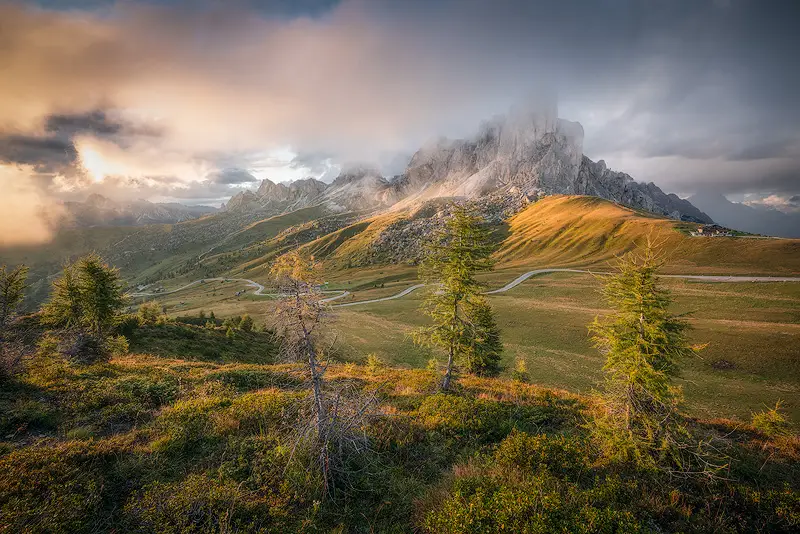
Cortina works because several distinct mountain groups fan out from the same valley: Cristallo and Sorapiss to the east, Tofane and the Falzarego side to the west, the Croda da Lago area to the south and the Tre Cime/Misurina direction farther northeast. You can choose very different kinds of landscapes without moving accommodation every night.
Nearby hikes worth planning:
- Lago di Sorapis. The hike from Passo Tre Croci includes an exposed ledge, fixed cables and metal ladders. Allow for the return and assess the route for your group.
- Cinque Torri: access around Bai de Dones / Rifugio Scoiattoli; some routes use a chairlift, so match distances to your chosen variant.
- Passo Giau meadows: a short scenic walk or the starting point for longer routes toward Nuvolau.
- Gores de Federa: a forest-and-waterfall hike beginning near Lago Pianozes.
- Lago Federa / Croda da Lago: choose a clearly mapped access route, as starts and distances differ markedly.
- Tre Cime: a realistic day trip via the Rifugio Auronzo road or seasonal services, but not a trailhead in Cortina itself.
For photographers, Cortina’s strength is variety. If cloud hides the mountains, you can look at the valley forests; if the sky clears, high passes give enormous views. The downside is predictable: popular accommodations and trailheads can be crowded in peak periods, parking and road access can be regulated, and the price of a central hotel may reflect the destination’s popularity.
Where within Cortina? The centre suits visitors who want restaurants, shops and bus access. Accommodation on the outskirts can be quieter and convenient for a specific direction, but may require a car for evening meals or varied trailheads. Don’t choose a hotel solely because it says “near Tre Cime”: check the actual travel route.
Best stay: three or more nights for a coherent cluster of eastern Dolomites hikes; longer if you want flexible weather days.
Start with the routes grouped by trailhead in our Best Hikes in Cortina d’Ampezzo guide. Official Lago di Sorapis route description.
Misurina
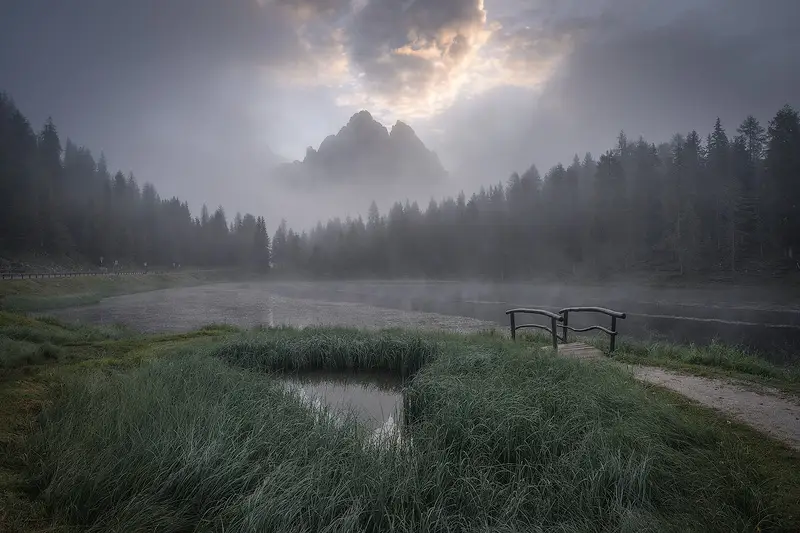
Choose Misurina if your list centres on Tre Cime di Lavaredo, the Cadini di Misurina, Lago d’Antorno and Lago di Misurina. The village sits by its own lake below the Cadini, with Lago d’Antorno on the road towards Tre Cime. It’s a focused base for the area and gives you two nearby lakes for shorter walks or photography. Cortina offers a wider choice of trailheads if your list also includes Sorapis, Giau and Croda da Lago.
Rifugio Auronzo access. The private-vehicle road above Lago d’Antorno operates seasonally and can close with snow or unsafe conditions. When it is open to visitor vehicles, advance booking with your licence plate is required. Check current opening and booking rules before committing to your hike. The seasonal 444 is a separate option with its own dates and booking. Official access and parking rules · Auronzo’s guide to the lakes.
Tre Cime hiking and access guide · Cadini di Misurina guide.
San Vito di Cadore
Choose San Vito if you want: a smaller village atmosphere, views of Monte Antelao and Monte Pelmo, hikes on the Cadore side and the option to drive toward Cortina when necessary.
San Vito sits in the Boite Valley, south of Cortina. It makes sense for people who enjoy returning to a quieter base after a full mountain day. There are walks and mountain approaches from the village area, including routes toward the Scotter / Rifugio San Marco side beneath Antelao. The nearby Lago di Mosigo provides a much gentler outing, with the mountains as a backdrop.
Hikes to match with this base:
- Scotter and Rifugio San Marco: mountain trails on the Antelao/Sorapiss side; check the exact start and elevation before choosing the route.
- Lago di Mosigo and valley walks: accessible scenery rather than a full alpine day.
- Pelmo and Passo Staulanza approaches: possible on a planned day out, but not immediately outside the village.
- Cortina area day hikes: Cinque Torri, Giau or Sorapis if you accept the extra road journey.
Trade-off: San Vito is a Cortina alternative, not a shortcut to every Cortina-area trailhead. You still need to drive north for Sorapis, the Tre Cime direction and many lifts. If almost every planned hike begins at Passo Tre Croci or Bai de Dones, staying in Cortina may be worth paying more for.
Best for: visitors with a car who value quieter evenings and are happy to balance local Cadore walks with selected Ampezzo day trips.
Dobbiaco / Toblach
Choose Dobbiaco if you want: Tre Cime access, the Alta Pusteria transport network, connections to Braies and the ability to combine hiking with a car-free or partly car-free holiday.
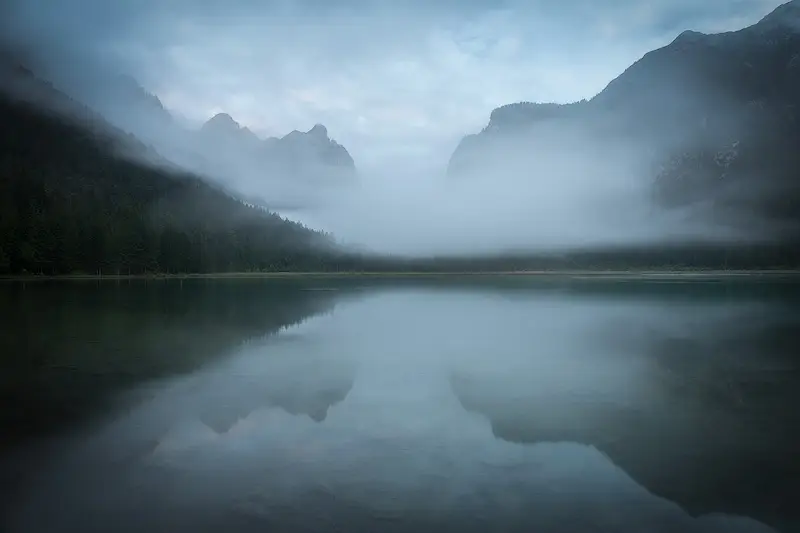
Dobbiaco’s great advantage is logistical. It sits on the railway corridor through the Puster Valley and is connected to regional buses. The seasonal 444 shuttle connects Dobbiaco to Rifugio Auronzo for Tre Cime. Regular line 442 serves Lago di Braies via Villabassa, including outside summer. Check booking rules and any extra services for your dates.
Nearby hikes and day trips:
- Tre Cime circuit: start at Rifugio Auronzo, reached by a regulated road or the seasonal shuttle; reserve where required.
- Lago di Dobbiaco: straightforward lake scenery close to town, with several possible walking options.
- Val di Landro / Dürrensee area: valley and mountain views along the corridor toward Misurina.
- Lago di Braies. Take line 442 via Villabassa or check the current driving rules. Choose a lakeside walk suited to your ability and check which sections are open.
- Prato Piazza / Plätzwiese: outstanding high meadows and walking options, but access rules differ from those for Braies or Tre Cime.
Why choose it over Cortina? Better integration with the train network, especially if your holiday is focused on Alta Pusteria and you do not want to rent a car. Conversely, Cinque Torri, Passo Giau and Croda da Lago are not local Dobbiaco trailheads. If those dominate your list, Cortina is the more coherent base.
Photography note: The ability to change plans between lake, forest and high mountain settings is valuable. But a bus that is convenient at 10 a.m. may not put you at a viewpoint at sunrise. Check first and last departures before assuming a car-free photographic itinerary will work.
Dobbiaco and San Candido travel guide · Lago di Braies transport and bookings.
Sesto / Sexten
Choose Sesto if you want: dramatic mountain scenery close to your accommodation, Val Fiscalina and routes into the Tre Cime Nature Park without constantly driving between valleys.
Sesto and nearby Moso are excellent for walkers drawn to the north-eastern Dolomites. Val Fiscalina / Fischleintal is the standout local valley, with accessible lower walks and demanding extensions toward high mountain huts and passes. These are very different undertakings: the easy valley-floor approach does not imply that the complete hut ascent is easy.
Hiking shortlist:
- Val Fiscalina to Rifugio Fondovalle: a classic valley walk, with local bus/parking options.
- Hikes toward Rifugio Comici / Zsigmondyhütte and Rifugio Locatelli: more demanding mountain routes requiring realistic time and fitness planning.
- Croda Rossa / Rotwand area: a mix of lift-assisted exploration and mountain trails, depending on the route.
- Tre Cime Nature Park from the Sesto side: routes are beautiful but can be far more strenuous than the popular Auronzo hut circuit.
Trade-off: Sesto is a better hiking base for the Val Fiscalina side, not for the entire Dolomites. Visitors whose main wish list is Seceda, Alpe di Siusi or Passo Giau should sleep elsewhere. It is a rewarding choice when you prefer to know one mountain landscape well.
Photography note: Forest edges, meadows and imposing limestone faces allow a range of compositions. Low cloud in the valley can be atmospheric; high paths require a different weather judgment.
Ortisei / St Ulrich
Choose Ortisei if you want: Seceda’s ridge, the Alpe di Siusi plateau, Resciesa and one of the most straightforward lift-based hiking setups in the western central Dolomites.

Ortisei is exceptionally practical for a first visit built around Seceda and Alpe di Siusi. The local lifts connect the village with high hiking areas, and the official Val Gardena tourism website confirms that the Seceda valley station can be reached on foot or by public transport. That does not mean the high-altitude trails themselves are suitable for everyone: choose a loop matched to your skills, weather and available time.
Trailhead-to-base logic:
- Seceda ridge: use the Ortisei–Furnes–Seceda lift system when running; longer walking approaches also exist.
- Alpe di Siusi: access the plateau using the Ortisei–Alpe di Siusi lift, or reach other plateau approaches separately.
- Resciesa / Rasciesa: a different high area accessed from Ortisei, suited to wide views and varied walks.
- Pieralongia and Cisles area: choose routes starting from the Seceda side; distances depend on the loop.
Best for non-drivers: This is one of the clearest “stay in town, walk to a lift, hike above the valley” combinations. Book lodging within easy reach of the lift station or a reliable bus stop if that is your priority.
Trade-off: Ortisei can be busy and prices vary substantially by season. It is not the most efficient base for Cortina’s Sorapis, Lago Federa or Tre Cime circuit. You can reach them with a car and enough time, but a dedicated eastern base reduces wasteful travel.
Photography note: Seceda’s sharp Odle skyline calls for thoughtful foregrounds and a balanced perspective. The Alpe di Siusi plateau offers softer shapes, small huts, broad meadows and atmospheric mist. These are two complementary visual worlds within the same general base.
Selva di Val Gardena
Choose Selva if you want: the Puez–Odle Nature Park, Sassolungo / Langkofel, Passo Gardena and the Sella landscape.
Selva is farther up Val Gardena and feels naturally oriented toward the surrounding high passes. If Ortisei is the obvious base for Seceda and Alpe di Siusi lift access, Selva is a compelling alternative for hikers whose itinerary focuses on Puez, Sella and Passo Gardena.
Hiking shortlist:
- Vallunga / Langental: a striking valley approach toward the Puez–Odle landscape, with route options of different lengths.
- Passo Gardena / Grödner Joch: high-pass scenery and a starting point for several different mountain outings.
- Sassolungo / Sassopiatto area: iconic limestone massifs with hut-to-hut circuits and more demanding variants; select the exact trail carefully.
- Puez Plateau: an ambitious destination requiring more walking than the shorter valley viewpoints.
The key difference from Ortisei: There is overlap between both villages, and valley buses can connect them. But if you plan several starts around Gardena Pass and Puez, staying farther up the valley can make a practical difference. Conversely, if Seceda and Alpe di Siusi are your only two priorities, Ortisei usually makes the plan simpler.
Car-free reality: Val Gardena has a developed network of public transportation and lifts, but exact connections, lift seasons and return times still matter. Do not assume you can always descend by lift after a late sunset session.
Alta Badia
Choose Corvara, Colfosco or San Cassiano if you want: the Fanes region, Pralongiá meadows, Pisciadú waterfalls, Sella views and access to the passes around Alta Badia.
Alta Badia is not a single village, and choosing its sub-base is important. Corvara and Colfosco work particularly well for the Sella / Passo Gardena side. San Cassiano is especially logical for the Capanna Alpina approach into the Fanes–Senes–Braies landscape. These are nearby in regional terms, but not interchangeable when every morning begins at a specific trailhead.
Hikes that match:
- Borest trail and Pisciadú waterfalls: an easier walk connecting the Corvara–Colfosco environment.
- Pralongiá meadows: open, panoramic hiking using the local high-pasture network; the official route from the San Cassiano side can continue toward Corvara.
- Fanes Plateau from Capanna Alpina: a strenuous option toward Col de Locia and beyond; the start is especially relevant when staying near San Cassiano.
- Passo Gardena / Sella-side routes: convenient from Corvara/Colfosco, with a range from ordinary hiking trails to difficult equipped routes.
Where exactly should you sleep? Choose Corvara for a lively centre and access toward Campolongo and the Sella side; Colfosco for a setting closer to Passo Gardena and the Sella walls; San Cassiano for the Capanna Alpina / Fanes direction. Accommodation in La Villa or Badia may suit a different budget or preference, but calculate the additional transfer to your chosen trails.
Trade-off: Alta Badia is a wonderful hiking region in its own right. Treating it merely as a cheaper way to visit Val Gardena would miss the point. Its central location does not remove the time needed to cross mountain passes, especially in busy periods.
Siusi / Castelrotto
Choose Siusi or Castelrotto if you want: the meadows of Alpe di Siusi, access toward the Sciliar / Schlern side and a calmer village-style alternative to Ortisei.

The Alpe di Siusi / Seiser Alm is one of the Dolomites’ great hiking landscapes: broad high meadows, mountain huts, trails of different lengths and the towering forms of Sassolungo and Sciliar in the background. Rather than moving from one dramatic summit to the next, walking here can be about space, light and small changes in the scenery.
Hikes to consider:
- Compatsch / Compaccio meadow walks: several accessible trail options across the plateau.
- Saltria area: longer meadow routes and connections toward the Sassolungo side.
- Sciliar foothill trails: potentially more demanding, depending on the chosen destination and ascent.
Access is the crucial detail: Private vehicle access to the plateau is restricted, and the official Alpe di Siusi tourism site publishes car-access and parking reservation rules. In many cases, the lift from Siusi is the simplest option. Rules can differ when the cable car is not running. Confirm current arrangements before booking a “drive-up” hotel plan.
Siusi or Ortisei? Stay in Siusi/Castelrotto if the Alpe di Siusi and Sciliar are the centre of your holiday. Choose Ortisei if you want to divide your days between the plateau, Seceda and Resciesa without a major change of base.
Official Alpe di Siusi access rules · Alpe di Siusi travel guide.
Val di Funes / Villnöss
Choose Val di Funes if you want: the Adolf Munkel Trail, Zannes trailhead, Odle/Geisler landscapes and a rural setting away from the main resort centres.
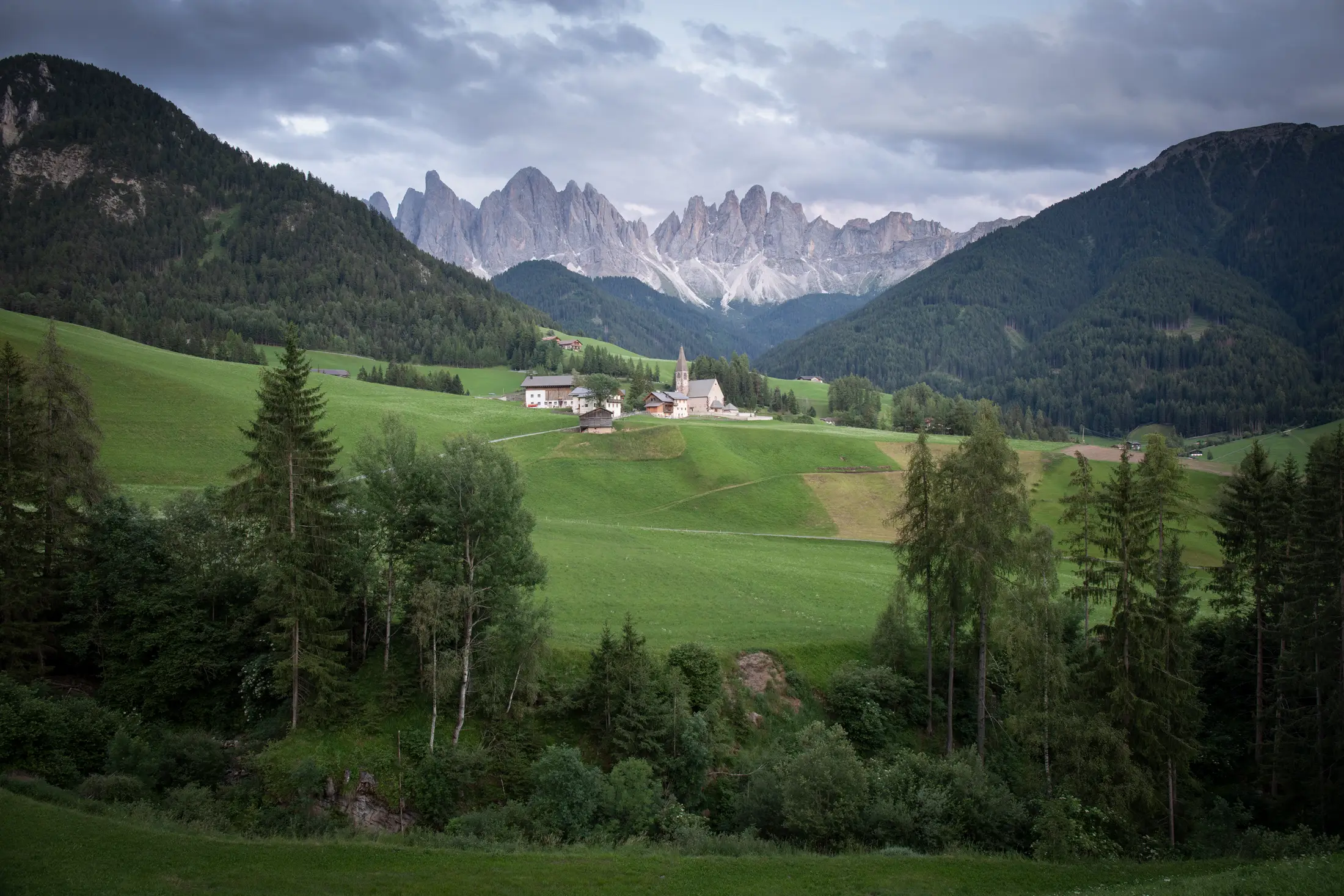
Val di Funes offers a quieter rhythm, with villages, meadows, forest and dramatic Odle pinnacles. It suits hikers and photographers who prefer one landscape explored well over constantly changing valleys. The main hiking access point for several routes beneath the Odle is Zannes / Zanser Alm.
Hikes that fit the base:
- Adolf Munkel Trail: the classic route beneath the Odle walls, with several loop variants of different length and difficulty.
- Zannes Nature Trail: an interpretive trail in the area; a shorter alternative to a full mountain hike.
- Geisleralm / Gschnagenhardt and other alpine pasture variants: choose a marked itinerary according to weather and fitness.
- Higher Odle/Puez approaches: significantly more demanding and not equivalent to the easy village viewpoints.
Without a car? It can work for selected hikes. The official destination site describes public-bus access to Zannes from the Chiusa/Bressanone direction, but you must verify the timetable and how to reach your particular accommodation. Remote lodging may not be within comfortable walking distance of an early bus.
Photography note: This is a beautiful area for restraint: a few larch trees against pale rock, distant mountain silhouettes and small agricultural structures. Respect private farmland and do not confuse a famous church-viewing location with a public path across the surrounding fields.
Trade-off. Stay in Val di Funes for Zannes, the Adolf Munkel Trail and walks beneath the Odle. Ortisei gives easier access to the lifts for Seceda and Alpe di Siusi.
San Martino di Castrozza
Choose San Martino if you want: the Pale di San Martino, Val Venegia, Passo Rolle, Baita Segantini and high plateau hiking near Rosetta.
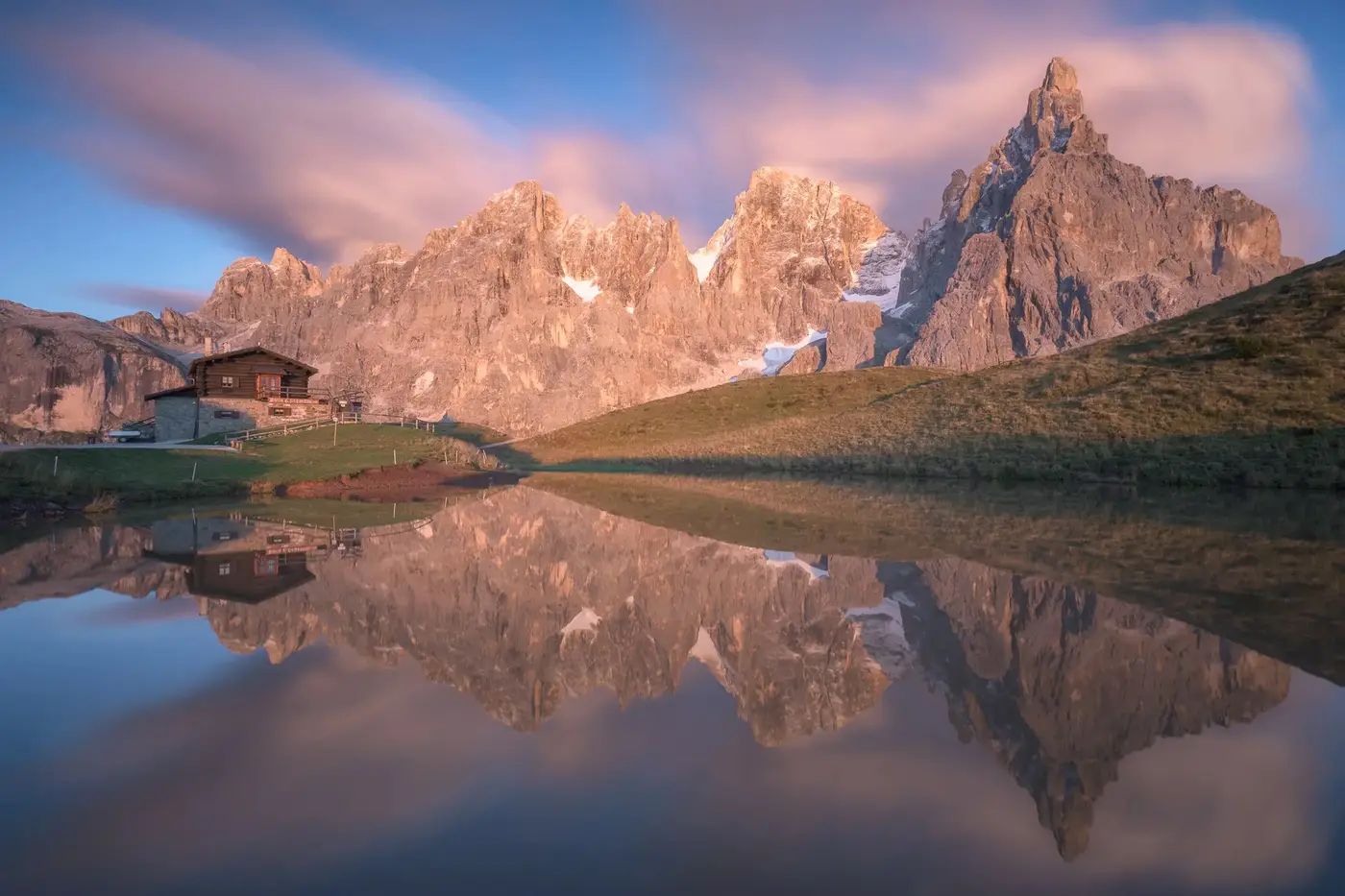
San Martino is a compelling destination in the southern Dolomites and deserves to be treated as a separate hiking region. The great Pale di San Martino walls, contrasting forest and open plateau scenery make this an especially varied base. It is a poor choice, however, for a traveller hoping to commute daily to Cortina or Ortisei.
Hikes that match:
- Val Venegia: a largely gentle-gradient valley route with a substantial total distance if walked in full; beautiful views toward the Pale.
- Baita Segantini / Passo Rolle: classic mountain panoramas, with different possible approaches.
- Rosetta Plateau: reached by lift when operating or by demanding routes on foot; exposed high terrain requires respect.
- Palaronda Trek: a multi-day mountain-hut experience for properly prepared hikers, not a casual day walk.
Logistics: Passo Rolle, Val Venegia and some park roads have seasonal access and shuttle regulations. The official local destination site publishes mobility information; check current arrangements as these may change from one summer to the next.
Best for: a dedicated two- to four-night southern Dolomites stay, or a separate part of a longer trip. A hiker interested primarily in the Pale di San Martino should not compromise by staying near Seceda just because both places are called “the Dolomites.”
Official Val Venegia route · Best hikes around San Martino and Passo Rolle.
One More Base Worth Considering: Arabba
Arabba is useful if your hiking list revolves around the Sella, Passo Pordoi, Porta Vescovo, Viel dal Pan and Marmolada-facing landscapes. The local tourism office identifies the Viel dal Pan as a classic high-level walking route with access from the Porta Vescovo side. It is a different geographic cluster from Cortina or Val Gardena, and one worth considering for a specialist hiking itinerary rather than adding a long detour to every day. Beware that versions of Viel dal Pan can include exposed sections and that lift availability changes seasonally.
Arabba tourism guide to Viel dal Pan.
Choose Your Base by Hike
Write down your top three hikes and their actual starting points, then group them by area. An itinerary spread across distant valleys may work better with two places to stay.
| Your top hikes | Sensible primary base |
|---|---|
| Sorapis + Cinque Torri + Lago Federa | Cortina |
| Tre Cime, Cadini, Lago d’Antorno and Lago di Misurina | Misurina |
| Tre Cime + Braies + Lago di Dobbiaco | Dobbiaco, with access checks |
| Val Fiscalina + Sesto mountain huts | Sesto |
| Seceda + Alpe di Siusi + Resciesa | Ortisei |
| Sassolungo + Puez + Passo Gardena | Selva |
| Capanna Alpina/Fanes + Pralongiá + Sella | Alta Badia, selecting the sub-village |
| Alpe di Siusi + Sciliar | Siusi or Castelrotto |
| Adolf Munkel + Zannes + Odle viewpoints | Val di Funes |
| Val Venegia + Baita Segantini + Rosetta | San Martino di Castrozza |
Check the grade of each approach and any variant before finalising a route. CAI hiking grades and via ferrata classifications.
How Many Bases Do You Need?
Three or four nights: one base, one mountain region
For a short trip, choose one base around your most important hikes. Pick Misurina for Tre Cime and the Cadini, Dobbiaco for rail and bus connections, or one of the other bases for its local hikes. Use one day for a highlight, one for a less crowded trail and leave some flexibility for weather. Do not try to see every famous destination from one hotel.
Six or seven nights: two complementary bases
Classic first trip: 3–4 nights in Cortina + 3 nights in Ortisei. This pairs eastern icons (Sorapis, Cinque Torri, Giau) with western highlights (Seceda, Alpe di Siusi). Expect a transfer day between regions; it is not a quick town-to-town hop.
Eastern mountain focus: 3–4 nights in Cortina + 3 nights in Dobbiaco or Sesto. Use Cortina for the Ampezzo trailheads and Dobbiaco/Sesto for Tre Cime, the Puster Valley network or Val Fiscalina.
Meadows and varied mountain trails: 3 nights in Ortisei + 3–4 nights in Alta Badia. This makes sense if you want Seceda/Siusi plus Fanes and the Sella, and do not need to include Cortina.
Ten or more nights: three regions, with rest and weather buffers
You might combine Cortina, Ortisei and San Martino di Castrozza, or Cortina, Sesto and Alta Badia, depending on your chosen hikes. Add recovery days and avoid using transfer days for challenging alpine objectives. A slower itinerary may deliver better experiences — and better photographs — than a longer checklist.
Staying in a Mountain Hut
There is one alternative that a village-based guide should not ignore: spend one or two nights in a mountain rifugio. This changes the entire rhythm of a hiking trip. You can enjoy quiet hours after day visitors have left and sometimes reach extraordinary locations on foot directly from the hut.
However, mountain huts differ enormously in access, booking systems, facilities, meals and seasonal opening dates. A hut is not automatically a luxury hotel, and staying there does not eliminate the need to assess the approach hike and onward route. Look up specific stays, approaches and seasonal openings in our Dolomites mountain huts guide.
Travelling Without a Car
Ortisei works well for lift-based days. Dobbiaco gives you a rail and regional bus connection for the eastern Dolomites. Check each trailhead, including how to get back.
Tre Cime: Seasonal Shuttle 444
444 runs seasonally from Dobbiaco via Misurina to Rifugio Auronzo for the Tre Cime loop. Confirm the operating season and advance booking for your travel date. Official Tre Cime bus and access guide.
Lago di Braies: Regular Bus 442
442 connects Dobbiaco, Villabassa and Lago di Braies and runs outside summer as well. Additional services, such as the 439 from Monguelfo when scheduled, depend on the period. During the published traffic restrictions, buses to the lake require advance online booking and payment. Check departures, extra services and booking rules for your dates. Südtirolmobil journey planner · Line 442 timetable for 2027 · Braies traffic and booking notices.
Val Gardena, Alta Badia and Val di Funes
Val Gardena and Alta Badia have valley buses and lifts that can be combined with selected hikes. In Val di Funes, confirm which departures serve Zannes. Late finishes and sunrise starts can fall outside public transport hours. Match your accommodation to the first departure and last viable return. Dolomites Hiking Without a Car.
Choosing Accommodation for Hiking
Use this checklist when comparing rooms and apartments near your chosen trailheads.
- Exact trailhead access. Enter the accommodation address and the real trailhead into a map. Check for passes, restricted roads and lifts — not just straight-line distance.
- Early breakfast or self-catering. A spectacular hotel breakfast that begins after your planned departure is not much help on an early mountain day.
- Drying and storage. Look for somewhere to dry hiking clothing and safely store boots, poles and photographic equipment.
- Parking and transport. Confirm whether parking is included, where the nearest usable stop is and whether you need reservations for mountain roads.
- Recovery and flexibility. A quieter room, laundry access, nearby groceries and an extra weather day can be worth more than another spa feature.
- Real total cost. Compare the nightly rate plus road tolls, lifts, parking, transfers and the value of time spent travelling.
A note for landscape photographers
If your priority is photography, proximity becomes even more important. The best light does not wait for a long transfer, and a calm dawn can turn into a windy midday. Consider pairing a mountain viewpoint day with a forest or lake day in the same region. Choose accommodation that lets you respond to changing weather without crossing half the Dolomites every morning.
Frequently Asked Questions
What is the best town to stay in the Dolomites for hiking?
Choose the base that serves your trailheads. Cortina works well for Sorapis, Cinque Torri and Giau. Misurina is closer to Tre Cime, the Cadini and the local lakes. Choose Ortisei for Seceda and Alpe di Siusi, or Sesto for Val Fiscalina.
Is Cortina or Ortisei better for a first trip?
Choose Cortina for Sorapis, Cinque Torri and the Ampezzo area. Choose Ortisei for Seceda, Alpe di Siusi and Resciesa. If your itinerary centres on Tre Cime and the Cadini, consider Misurina.
Where should I stay for Tre Cime and the Cadini?
Misurina suits a trip focused on Tre Cime, the Cadini, Lago d’Antorno and Lago di Misurina. Dobbiaco is useful if you are arriving by train and can use seasonal shuttle 444. Check Rifugio Auronzo road opening and booking before relying on vehicle access.
Can I stay in one hotel and visit all the famous hikes?
Technically you can drive across several regions, but this often means long journeys and awkward early starts. With about a week, splitting into two bases can make the trip more enjoyable.
Where should I stay in the Dolomites without a car?
Ortisei has lifts for Seceda and Alpe di Siusi. Dobbiaco connects to rail, the regular 442 for Braies and the seasonal 444 for Tre Cime. Check the route, return times and booking rules for your dates.
Is Alta Badia a good base for Seceda?
It can be reached from Alta Badia, but Alta Badia is a more natural base for Fanes, Pralongiá and Sella-side hikes. For several Seceda/Alpe di Siusi days, Ortisei usually makes more logistical sense.
What is a quieter alternative to Cortina?
San Vito di Cadore is one option if you have a car and do not mind extra driving to some trailheads. Dobbiaco and Sesto are alternatives for a different hiking focus, rather than cheaper versions of Cortina.
Which area is best for easy hikes?
Alpe di Siusi offers many gentler meadow walks. Cortina also has short scenic routes, including Passo Giau meadows and Lago di Lìmedes. Check the actual route grading and conditions before setting off.
When should I book accommodation?
Popular summer and early-autumn periods can fill well in advance, particularly around famous trail regions. Book with the necessary flexibility if your hiking dates and transport arrangements are still uncertain.
Can I hike these trails in October?
Conditions vary. Snow and ice may arrive, daylight is shorter, and seasonal huts, lifts or shuttles may already be closed. Do not assume a summer route remains suitable.
Final Thoughts
Choose a valley or two around the walks you most want to do. Check the trailheads, transport and return before booking, and leave enough flexibility to change a route when the weather shifts.
For a private hike or photography day around your chosen base, tell Federico which trails and dates you are considering. Contact OutdoorPhotoDream.
Explore with OutdoorPhotoDream
Experiences
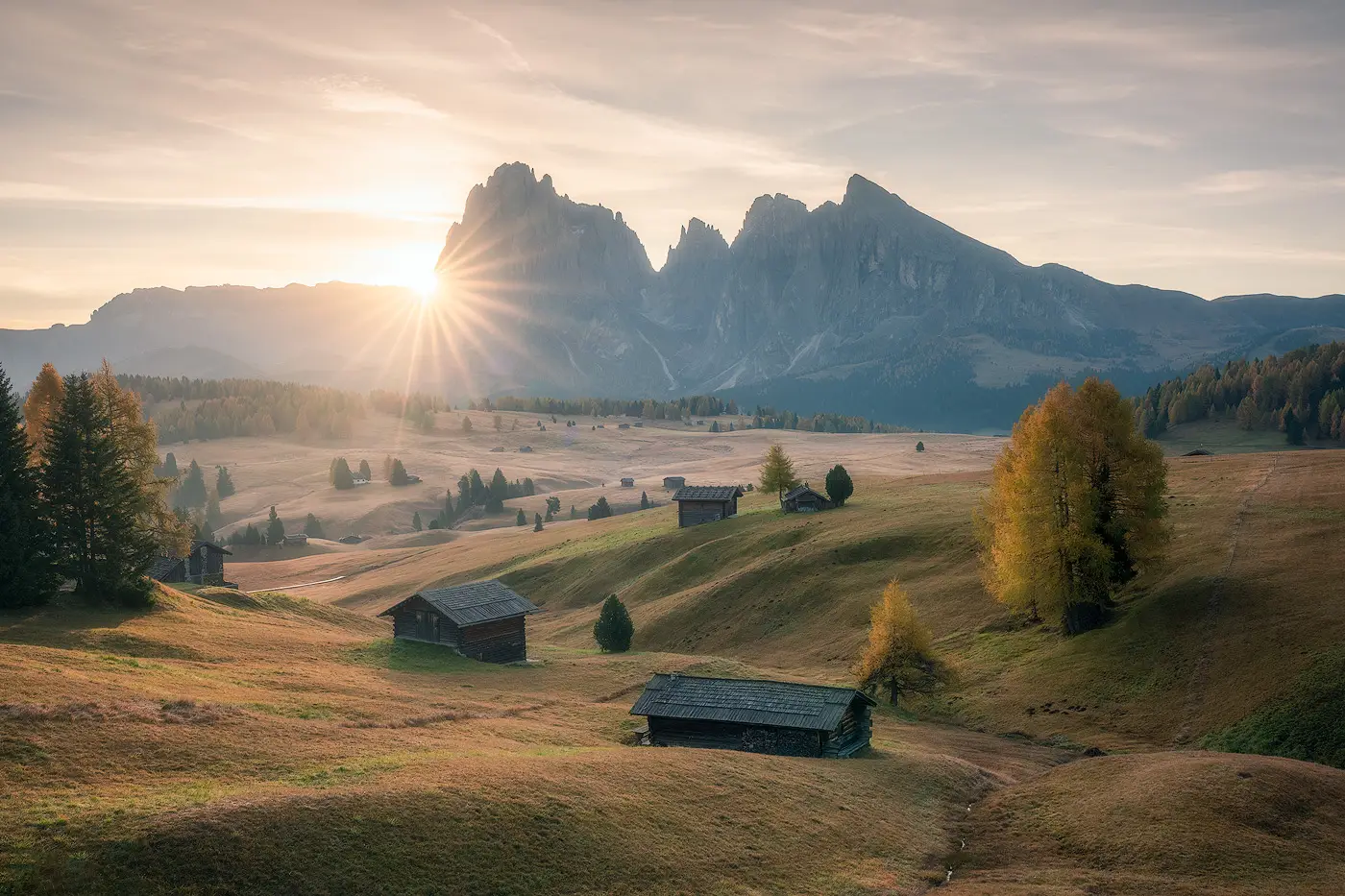
Private Guided Hikes in the Dolomites
Plan a private hike with Federico around your interests, walking pace and the conditions on the day. Photography guidance is available along the way.
Explore Experiences
Private Tours
Private Dolomites Photography Tour
Build a Dolomites photography itinerary around the landscapes and light you want to work with, with time to plan suitable walks and viewpoints.
Explore Private Tour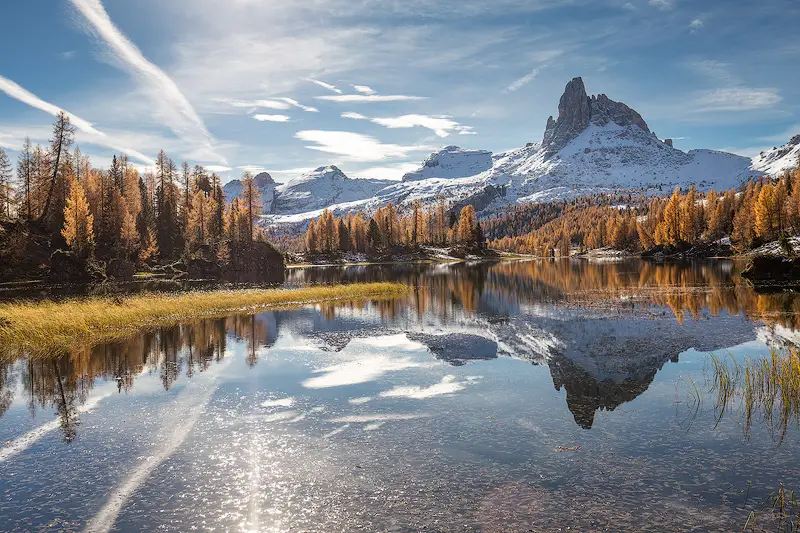
Group Photography Tours
Dolomites Autumn Photography Tour
Photograph autumn colour, reflective lakes and mountain light in the Dolomites with a small group and in-the-field guidance.
Explore Photo Tour
About the author
Federico Antonello
Related Field Notes
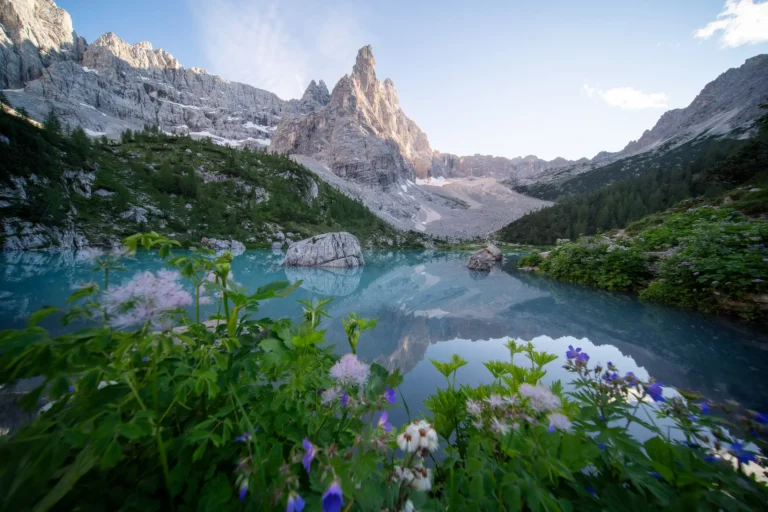
Best Hikes in Cortina d’Ampezzo: 12 Scenic Trails and Mountain Walks
Compare 12 hikes near Cortina, from short meadow walks to the Tre Cime circuit, with trail difficulty, seasonal access and photography advice.

Dolomites Hiking Difficulty Explained: The CAI Trail Grading System
Understand Italian CAI hiking grades and the separate via ferrata scale, then use a practical checklist to choose a Dolomites photography hike.
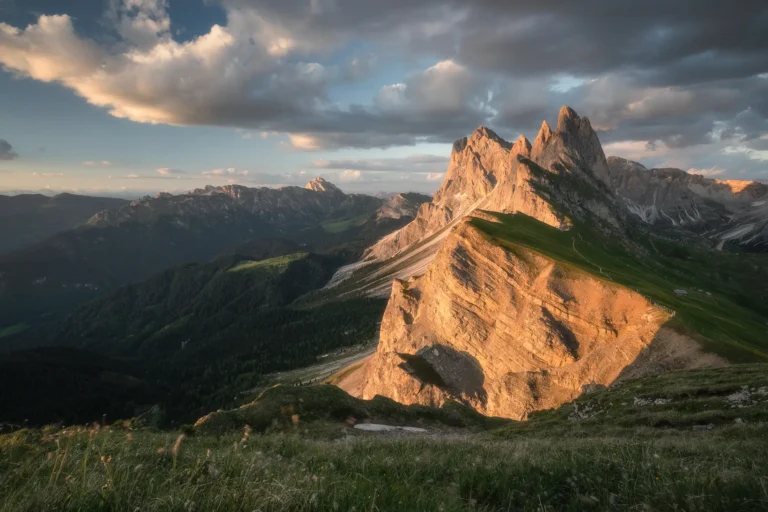
Dolomites Hiking Without a Car: The Complete Guide to Trains, Buses and Trailheads
Choose a base, plan the last bus and find 13 hiking areas in the Dolomites you can reach by train, bus or lift. Includes shuttle advice and three sample itineraries.


