

Field Notes / Destination Guide
Plitvice Lakes Photography Guide
Ten places to photograph Croatia’s waterfalls and lakes, with official walking routes, seasonal light and practical camera settings.
Explore by AreaIntroduction
At Plitvice Lakes, a shaded cascade or a line of trees reflected in turquoise water can hold your attention longer than the largest waterfall. To give those scenes time, start by choosing the right entrance and getting familiar with the park’s marked walking programmes.
This guide covers where to photograph Plitvice Lakes, how to choose a walking route, when the light works, and what equipment is genuinely useful. It also covers the details that can make or break a photographic visit: narrow boardwalks, slippery steps, midday contrast, autumn colour, polarizing filters, crowds, and whether sunrise photography is actually possible during official opening hours.
Routes & Entrances
Choose Entrance 1 (Rastovača) for the Lower Lakes and Veliki Slap. Choose Entrance 2 (Hladovina) for the Upper Lakes when open. Parking at both entrances is paid. Check the official directions and park map before booking your entrance and time slot.
Photo visit at a glance
| Question | Practical answer |
|---|---|
| Where is it? | Central Croatia, between the Zagreb and Adriatic travel corridors. |
| Main entrances | Entrance 1 (Rastovača) for the Lower Lakes; Entrance 2 (Hladovina) for convenient Upper Lakes access. |
| Main photography subjects | Veliki Slap, Sastavci, Lower Lakes canyon, Upper Lakes cascades, Lake Kozjak and forest details. |
| Best overall conditions | Cloudy-bright or overcast skies, calm air, rain-cleared forests and autumn colour. |
| Best seasons | Spring for water and fresh foliage; autumn for colour and atmosphere. Summer is accessible but usually busier; winter is highly conditional. |
| How long? | Half-day for one area; one full day for a broad overview; two days for unhurried photography. |
| Camera kit | Wide or standard zoom, optional telephoto, circular polarizer, light rain protection; ND filter and a compact tripod where practical. |
| Important limitation | The park may open after astronomical sunrise and close before sunset; always plan within permitted visiting hours. |
| Tickets | Choose entrance and entry time during booking. Check the official website for current prices and availability. |
Plitvice has 16 named lakes connected through a changing system of waterfalls and natural barriers. The Lower Lakes occupy a deep limestone canyon. The Upper Lakes form a more open, forested landscape with a remarkable concentration of smaller cascades. Lake Kozjak lies between these systems and is used by the park’s electric-boat service.
Lower Lakes: Think dramatic canyon views, elevated panoramas, wooden walkways and the famous Veliki Slap and Sastavci waterfalls. These are the most obvious subjects for a first visit, and Entrance 1 usually makes the logistics straightforward.
Upper Lakes: Think layers of water running between mossy terraces, filtered forest light, intimate patterns, and calmer compositions. Entrance 2 and the official E, H or K2 programmes are useful starting points when operating.
Lake Kozjak: Think reflections, simplified tree lines, larger expanses of water and quieter landscape photographs. However, boat timetables control when you can move between shores, and photographing from a moving boat is less precise than composing from a fixed public path.
You do not need to follow every metre of a tourist loop to make good photographs, but you must stay on the designated public paths. Avoid informal shortcuts, fragile barriers and supposed ‘secret’ viewpoints reached by unmarked descents. Protected areas are not places to improvise access with a tripod in hand.
Compare the eight official park programmes
The distances and times describe entire visitor programmes. Allow extra time for photography and transfers. Confirm your route with the national park’s programme guide.
| Programme | Start, distance and time | Photography focus |
|---|---|---|
| A | Entrance 1 · 3.5 km · 2–3 h | Lower Lakes, canyon and Veliki Slap with limited time. |
| B | Entrance 1 · 4.0 km · 3–4 h | Lower Lakes plus Lake Kozjak, boat and panoramic transport. |
| C | Entrance 1 · 8.0 km · 4–5 h | Both lake areas in one day, with transfers. |
| E | Entrance 2 · 5.1 km · 2–3 h | Upper Lakes cascades and forest compositions. |
| F | Entrance 2 · 4.6 km · 3–4 h | Lower Lakes from Entrance 2, boat and panoramic return. |
| H | Entrance 2 · 8.9 km · 4–6 h | A broad Upper and Lower Lakes visit. |
| K1 | Entrance 1 · 16.5 km · 6–8 h | Long walking itinerary, including Tomićevo Pogledalo. |
| K2 | Entrance 2 · 17.5 km · 6–8 h | Long walking itinerary, including Tomićevo Pogledalo. |
Choose by subject. choose A or B when the Lower Lakes are your priority. Choose E when you want concentrated Upper Lakes photography. Consider C or H when you have one full day and want variety. K1/K2 suit stronger walkers who specifically want the longer route and the Tomićevo viewpoint, not necessarily photographers trying to maximize time behind the camera.
Book for your chosen entrance and time on the official ticket website. The regular park ticket includes the boat and panoramic vehicle within the chosen programme when operating. Check the park’s alerts, entrance and transfer hours and current ticket information before you go. Access guidance checked 25 November 2026.
Compare all 10 photography locations
| Location | Area | Photographic subjects |
|---|---|---|
| Entrance 1 Panorama | Lower Lakes | Elevated canyon views and autumn colour |
| Veliki Slap | Lower Lakes | The Great Waterfall and limestone cliffs |
| Sastavci | Lower Lakes | Overlapping curtains of water |
| Lower Lakes Boardwalks | Lower Lakes | Leading lines, water colour and woodland |
| Lake Kozjak Reflections | Lake Kozjak | Still water and reflected forest |
| Veliki Prštavac | Upper Lakes | Larger cascades and water movement |
| Mali Prštavac | Upper Lakes | Small cascades and telephoto details |
| Galovac & Gradinsko | Upper Lakes | Terraces, streams and moss |
| Lake Prošćansko | Upper Lakes | Quiet forest edges and reflections |
| Tomićevo Pogledalo | Upper Lakes viewpoint | Layered lake and forest panoramas |
Explore by Area
Lower Lakes
Start from Entrance 1 for the canyon, its raised viewpoints and the waterfall approaches. Leave time for both the wide views and the smaller details at water level.
Entrance 1 Panorama
- Access Entrance 1 (Rastovača). Follow signs for the official Lower Lakes route.
- Suggested programme A, B or C.
- Time from the beginning of your visit. No separate distance is asserted.
- Best conditions even light, gentle cloud and autumn colour.
- Useful lenses 24–70mm and 70–200mm.
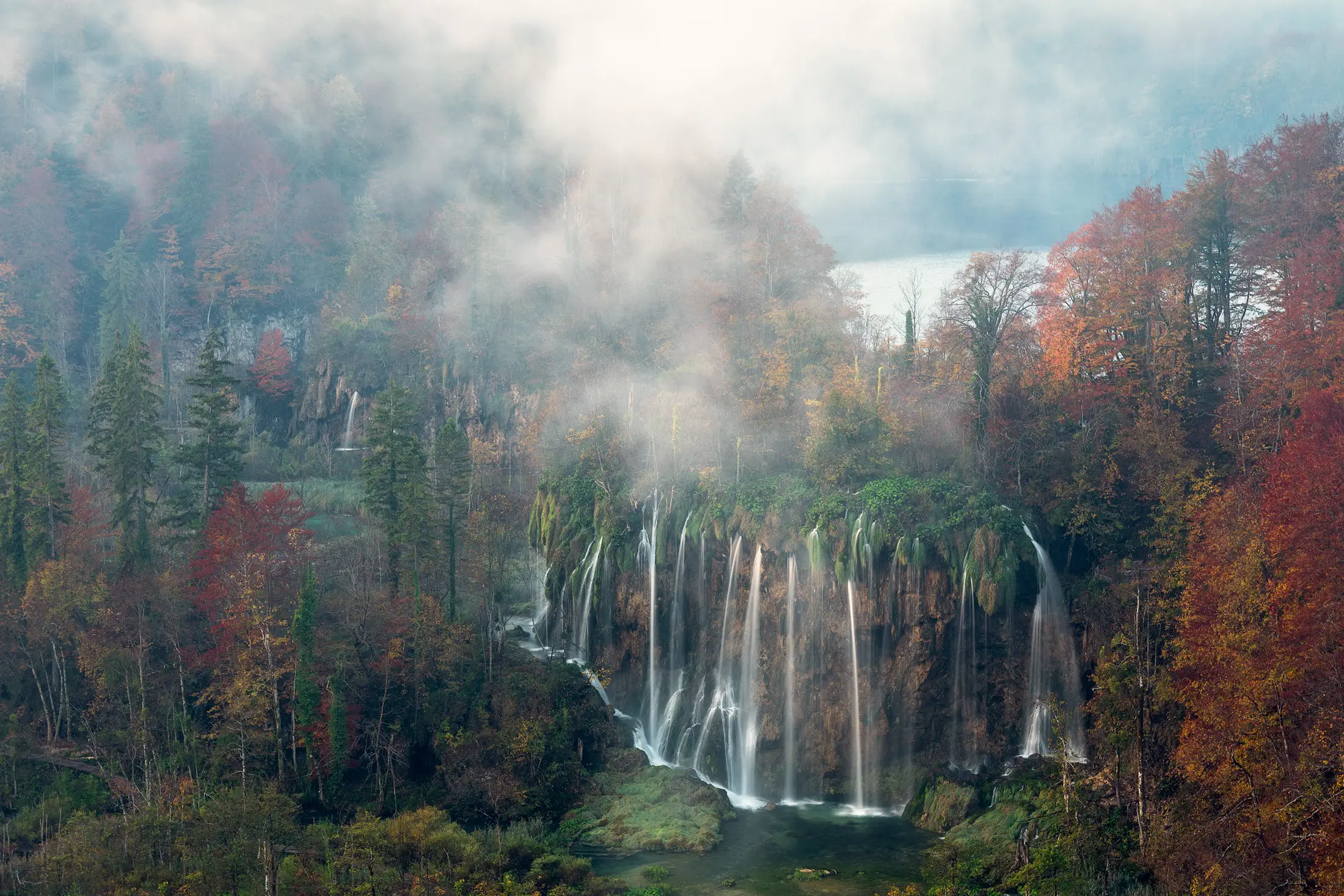
The elevated approach above the Lower Lakes canyon gives an immediate sense of how extraordinary Plitvice is: blue-green water, forest-covered slopes, waterfalls and thin boardwalks weaving through the landscape. It is also one of the few places where the geometry of the entire canyon can become the subject rather than an individual cascade.
Before making a wide photograph, check how the walking paths lead the eye. The pale boardwalks can provide useful lines, but they can also become strong distractions. Try a second image with a longer focal length, excluding unnecessary sky and isolating the most interesting relationships between water, cliff and trees.
Photography notes. On bright days, watch the contrast between sunlit water and shaded limestone. A bracketed sequence can be sensible when the highlights are close to clipping, but check whether a single well-exposed RAW is sufficient before creating extra files.
Good to know. This is an official visitor approach, not permission to enter the surrounding slopes. Stay behind barriers and on marked viewpoints. Early access depends on the park’s actual opening time, not the sunrise time printed in an astronomy app.
Veliki Slap
- Access Lower Lakes section, most straightforward from Entrance 1.
- Suggested programmes A, B, C, F, H, K1 or K2.
- Best conditions cloud cover or soft light. A little atmospheric spray can add depth.
- Lenses 16–35mm for context, 24–70mm or 70–200mm for patterns.
Veliki Slap is the park’s most imposing waterfall, dropping into the Lower Lakes landscape close to the point where water continues towards the Korana River. It is tempting to expose for the entire white curtain with a very long shutter speed. But that often removes the water’s internal structure, leaving a blank streak against dark rock.
A more useful starting sequence is 1/125 second, 1/8 second and 1 second, adjusting according to light and flow. The faster image retains spray and energy. The slower images reveal different shapes. There is no universally correct shutter speed. Check the histogram and the white water rather than judging the photograph from the camera’s bright rear screen.
Composition idea. Make one vertical frame emphasizing the fall’s height, then a second horizontal frame placing it within the canyon. A small human presence on a distant authorised walkway may show scale, provided it does not disturb other visitors.
Good to know. Wet steps and spray require a lens cloth and secure footing. Photography never justifies leaning beyond the approved path or blocking a narrow viewpoint. The marked route can change with maintenance or high water.
Sastavci
- Access Lower Lakes near Veliki Slap, within the official programmes covering the canyon.
- Best conditions overcast sky, even reflected light, strong but manageable water flow.
- Lenses 24–70mm and 70–200mm.
- Filters CPL. Optional ND.
Sastavci is especially attractive when you want several cascades interacting inside one composition. Instead of making every stream equally important, choose the clearest foreground-to-background relationship. A telephoto lens can isolate separate curtains of water, while a wider view emphasizes the meeting of the flows.
Water moving at different speeds presents a useful exposure exercise. Photograph the same composition at approximately 1/4, 1/2 and 2 seconds. Shorter times may preserve definition in the fastest sections. Longer times can reveal a gentler effect in slow streams. Protect highlights and adjust according to the actual scene.
Photography notes. A polarizer can reduce distracting glare on wet rock and foliage. Rotate it while watching the water, because removing all reflection may also remove the luminous surface that gives the composition life.
Good to know. Follow the signed route to a public viewpoint and stay behind barriers. Use authorised viewpoints on the current official walking route.
Lower Lakes Boardwalks
- Access Official Lower Lakes paths through Milanovac, Gavanovac, Kaluđerovac and Novakovića Brod.
- Suggested programmes A, B, C, F or H.
- Best light overcast or completely shaded sections.
- Lenses 16–35mm, 24–70mm. Telephoto for detail.
Some of the most memorable Plitvice photographs are not made at the biggest waterfall. They come from the relationship between a boardwalk, a small cascade, turquoise water and the surrounding vegetation. These elements create natural rhythm, but they also make the scene visually busy.
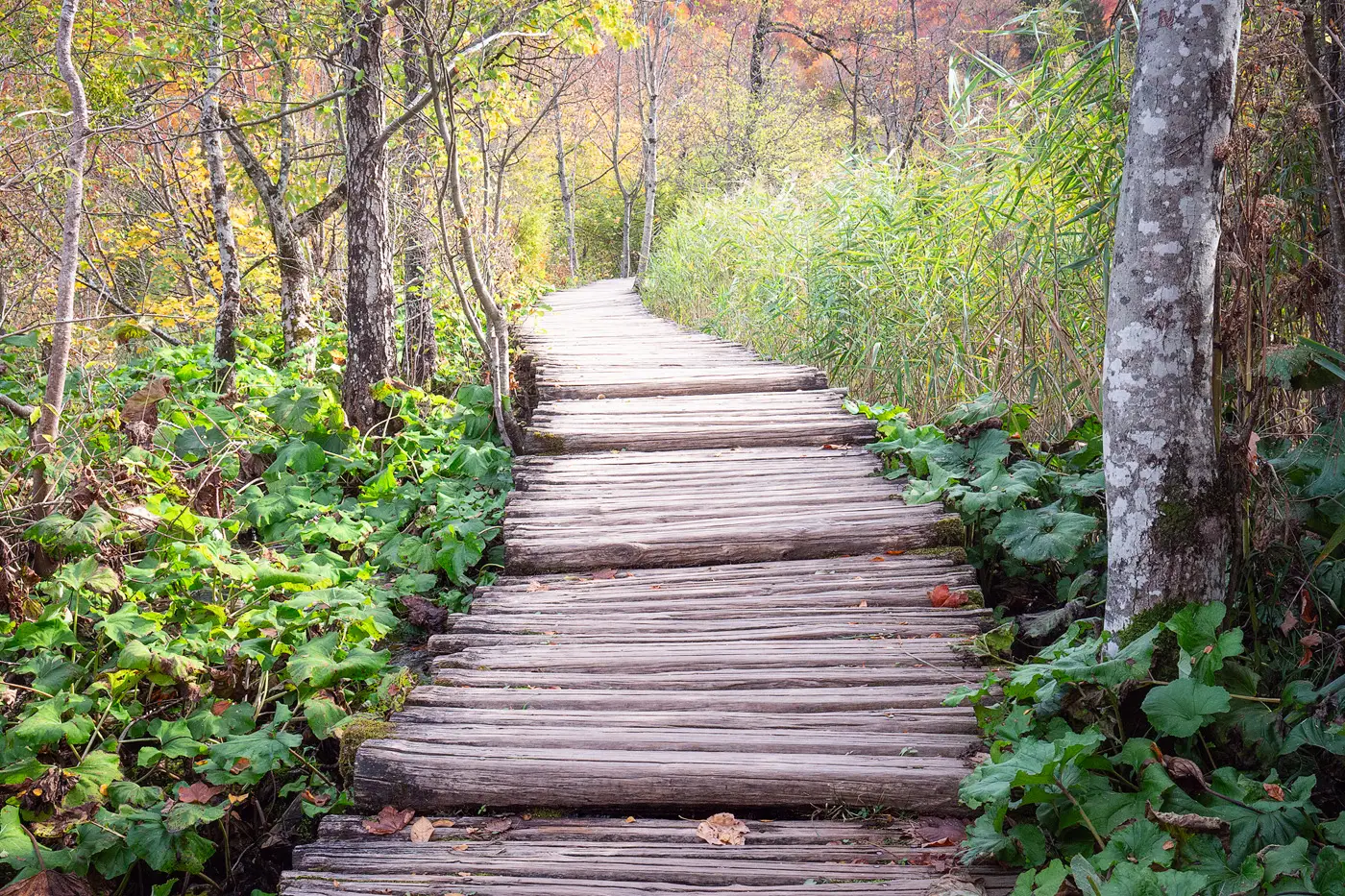
Look for a simple subject first: perhaps a single stream crossing beneath the walkway, or a set of repeating curves formed by the barriers. Then simplify the frame. Removing one bright patch of reflected sky or a cluttered branch can make a stronger difference than changing the camera settings.
Photography notes. Handheld photography is often the best practical solution on narrow boardwalks. A stabilized lens at a moderate shutter speed may produce a cleaner result than a tripod shaken by passing footsteps. If stopping, leave free passage and follow any instructions from park staff.
Good to know. A wooden path beside deep water is not a place to step sideways for ‘a better angle’. Surfaces can be wet and slippery, and the park explicitly forbids leaving marked paths.
Lake Kozjak
Kozjak connects the two lake systems. Work from a public shoreline path when you want to study the reflections without the movement of the boat.
Lake Kozjak Reflections
- Access Near both lake areas via official programmes and boat stations. Exact access depends on the chosen route.
- Suggested programmes B, C, E, F, H, K1 or K2.
- Best conditions calm air, broken reflections and atmospheric forest edges.
- Lenses 24–70mm, 70–200mm.
Lake Kozjak offers breathing room between waterfall sessions. Instead of trying to show as many cascades as possible, use the broad water surface to create calmer photographs: a line of trees reflected in grey light, a tiny interruption in a smooth reflection or a simple relationship between two forested shores.
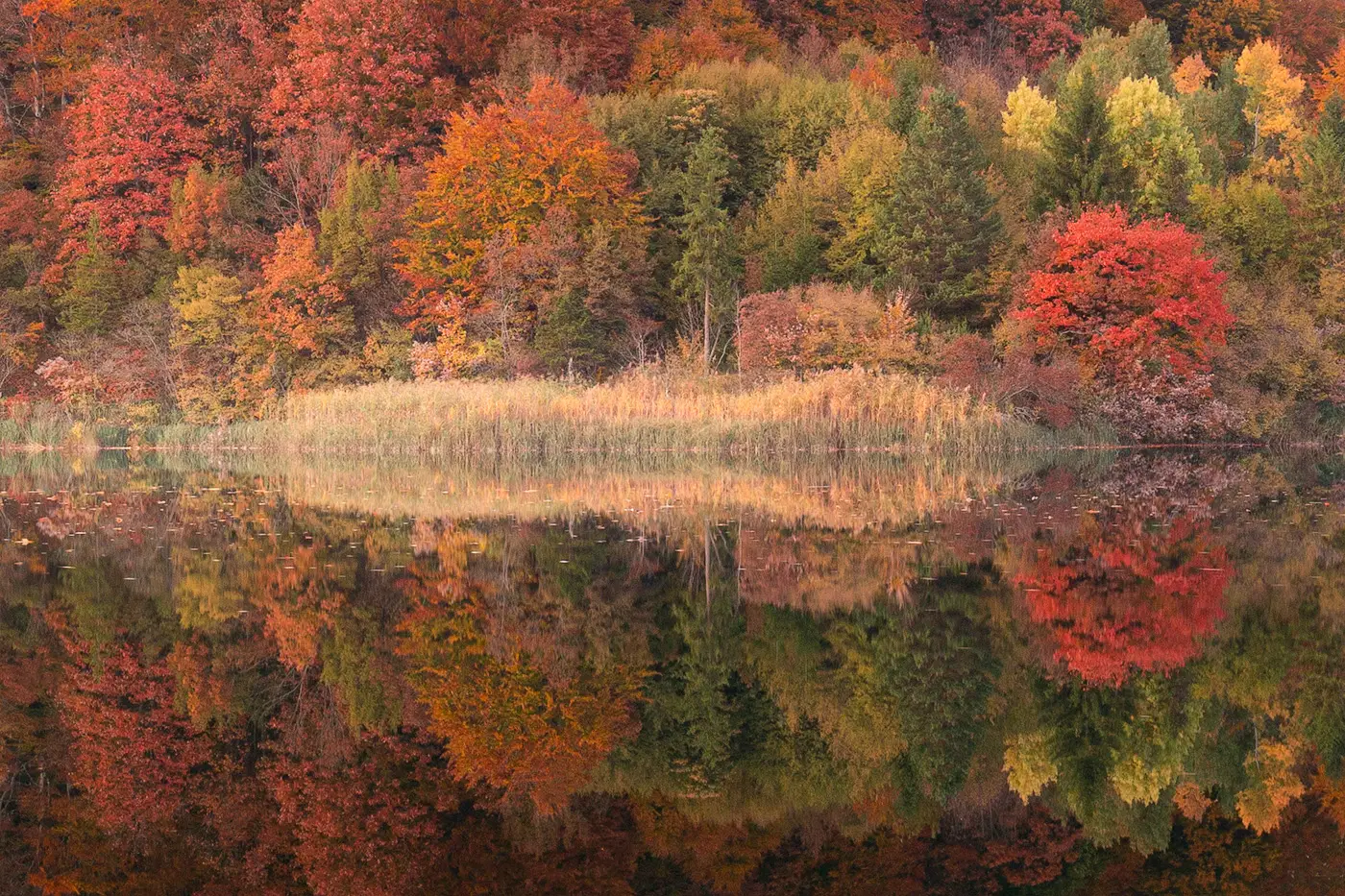
If reflections are the subject, reduce the polarizer’s effect rather than keeping it at maximum strength. If underwater colour and detail are the subject, rotate it until the glare is reduced without making the lake look unnaturally dark.
Photography notes. When travelling on the electric boat, observe the compositions but do not assume the boat will stop for your camera. Decide whether the aim is a spontaneous handheld image or a carefully composed photograph from a marked lakeshore position.
Good to know. Boat schedules vary by season and conditions. A promised evening reflection is not useful if the last transport connection has already departed.
For more on simplifying reflections and edges, see Minimalist Landscape Photography.
Upper Lakes
From Entrance 2, routes through the Upper Lakes can take in forested shores, low cascades and the uppermost lake. Check openings before choosing a programme.
Veliki Prštavac
- Access Upper Lakes system, following the authorised route and signs.
- Suggested programmes C, E, H, K1 or K2.
- Best conditions soft light and rain-cleared foliage.
- Lenses 16–35mm to 70–200mm.
- Filters CPL, optional ND.
Veliki Prštavac is one of the strongest subjects in the Upper Lakes area, especially when water spreads across terraces and vegetation. The surrounding forest allows photographs that feel more intimate than the wide Lower Lakes canyon views.
The challenge is controlling visual complexity. Look for one cascade as the anchor, then decide whether the surrounding leaves and smaller streams reinforce it. On a grey day, the subtle variations of green and brown can work beautifully without aggressive saturation.
Photography notes. Begin with about 1/3–1 second for a natural sense of flow. Compare with a faster image to preserve detail where the water breaks against rock. A telephoto crop can sometimes explain the movement better than the familiar wide waterfall composition.
Good to know. This is not a separate roadside stop. Your approach is part of the Upper Lakes network. Check the current programme because sections may close seasonally.
Mali Prštavac
- Access Upper Lakes route, near the main cascade system.
- Suggested programmes C, E, H, K1 or K2.
- Best conditions shade, light rain and even forest light.
- Lenses 24–70mm, 70–200mm.
Mali Prštavac works particularly well for photographs that prioritize relationships rather than scale: one waterfall behind a branch, a softly lit rock surrounded by moving water, or a small patch of foliage against a darker background.
Choose the position and focal length before adding an ND filter. A longer exposure cannot rescue a composition in which too many separate cascades compete for attention. For a deliberately restrained image, remove one side of the scene, exclude distracting highlights and leave space around the main stream.
Photography notes. Photograph at two different focal lengths from the same safe path position. You may find that the telephoto version feels more atmospheric because it eliminates the brightest water in the foreground.
Good to know. Water levels and the appearance of the smaller falls change. Avoid treating a photograph from a previous year as a guaranteed arrangement of flowing water.
Galovac & Gradinsko
- Access Upper Lakes, within the marked walking network.
- Suggested programmes C, E, H, K1 or K2.
- Best conditions cloud cover, rain-washed foliage and spring or autumn textures.
- Lenses 24–70mm and 70–200mm. Wide angle for selected walkway compositions.
The sequence of smaller lakes and terraces is one of Plitvice’s richest areas for photographic details. Here the objective is often not to identify a landmark, but to discover a clear arrangement of water, vegetation and rock.
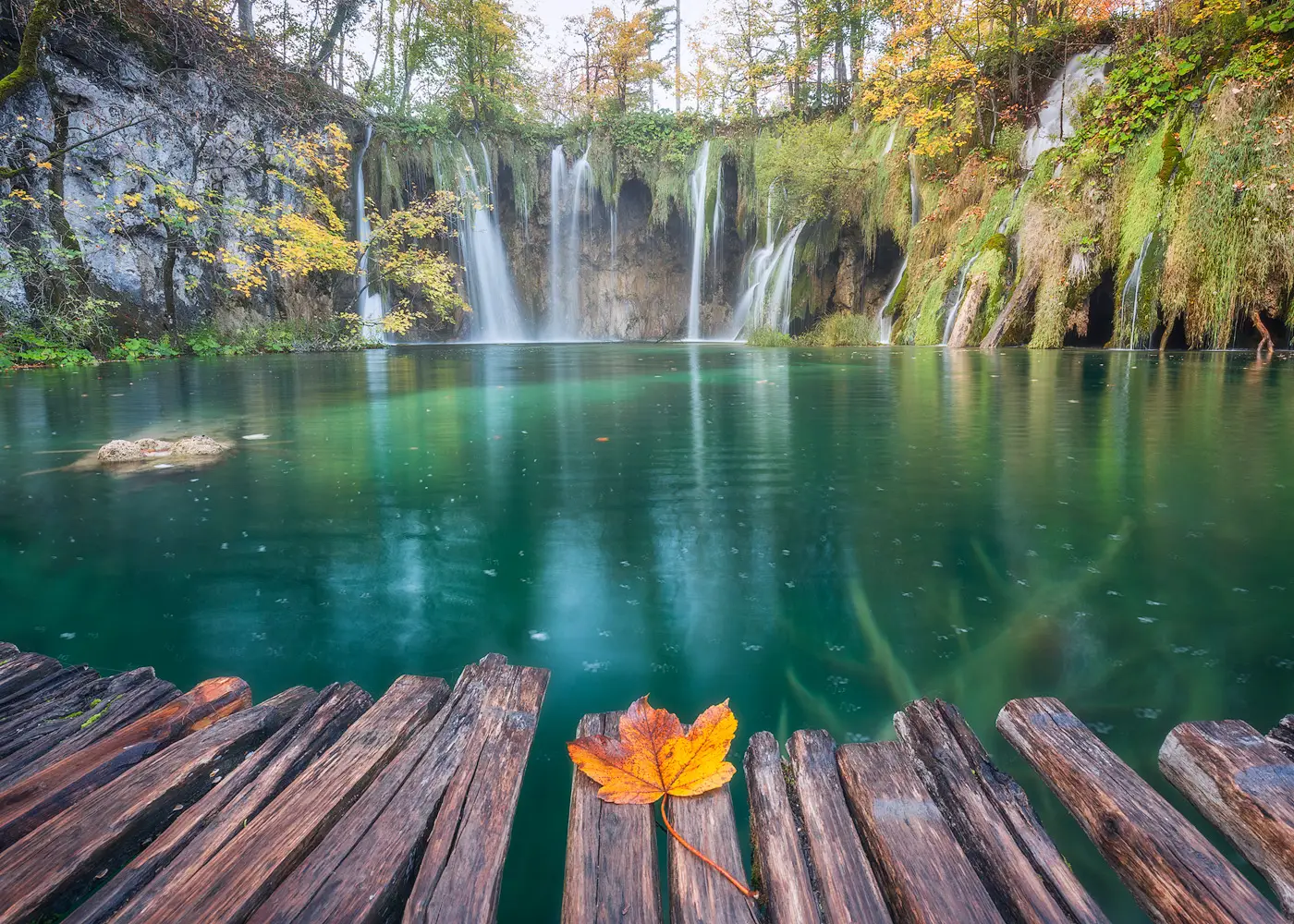
Look for repetition: thin curtains of water separated by mossy ledges, a curved shoreline echoed by the boardwalk, or groups of leaves floating above a deeper turquoise patch. These scenes reward patience. Spend a little longer with one composition instead of filling the memory card with every visible cascade.
Photography notes. Try a short telephoto study at f/8 and low ISO, first with a shutter fast enough to retain moving water detail and then with a slower exposure. Keep the same framing so the comparison actually teaches you something.
Good to know. Individual small cascades may not have separately named public viewpoints. Use the official marked programmes for access rather than following an unverified online pin.
Lake Prošćansko
- Access Upper Lakes, normally approached through a longer section of the official Upper Lakes route.
- Suggested programmes E, H, K1 or K2 when operating.
- Best conditions calm water, filtered light and autumn colour.
- Lenses 24–70mm and 70–200mm.
Prošćansko, the uppermost major lake, has a quieter photographic character than the dramatic waterfall areas. Its natural subjects are reflections, tree groups and patches of contrasting foliage above still water.
Here a small change of viewpoint can matter more than the sky. Watch the relationship between the horizon, the reflection line and the forest edge. A slightly longer focal length makes it easier to produce images with only two or three primary elements.
Photography notes. In autumn, avoid assuming the most colourful tree is automatically the best subject. Sometimes a pale trunk within subdued foliage gives the composition greater structure. Control the polarizer to retain the reflection when needed.
Good to know. Longer routes and transfers take time. If this is a priority, do not plan it at the end of the visit without checking the last return service.
Tomićevo Viewpoint
Set aside time for the uphill detour if you are already planning one of the longer K programmes.
Tomićevo Pogledalo
- Access Official viewpoint reached by an uphill detour on K1 or K2.
- Official additional climb approximately 20 minutes according to the park.
- Suitable for walkers who want a wider landscape perspective.
- Lenses 24–70mm and 70–200mm.
Tomićevo Pogledalo looks out across the Upper Lakes from above the forested slopes. The park describes a panorama across several Upper Lakes, including Ciginovac and Okrugljak, with a broader view towards Prošćansko.
From an elevated position, layers become more important than individual waterfalls. Look for the way forest and water divide the landscape into broad shapes. Avoid trying to include every lake in a single photograph. Atmospheric haze can be useful rather than a flaw, especially when it separates distant layers.
Photography notes. A telephoto lens helps simplify the panorama and isolate repeating curves. A wide view is helpful to document the landscape, but a narrower frame is often stronger editorially.
Good to know. Allow time for the climb and return within the longer K1 or K2 outing. Check that the route and viewpoint are open.
Daylight at Plitvice Lakes
Approximate sunrise and sunset on the 15th of each month in 2027, in local time (CET or CEST), rounded to five minutes using the NOAA solar method. The canyon can stay in shade after sunrise.
| Month | Sunrise | Sunset |
|---|---|---|
| January | 07:30 | 16:40 |
| February | 07:00 | 17:25 |
| March | 06:10 | 18:05 |
| April | 06:15 | 19:40 |
| May | 05:30 | 20:20 |
| June | 05:10 | 20:45 |
| July | 05:25 | 20:40 |
| August | 06:00 | 20:05 |
| September | 06:35 | 19:10 |
| October | 07:10 | 18:15 |
| November | 06:55 | 16:30 |
| December | 07:30 | 16:15 |
The park can open after sunrise and close before sunset. Plan around your first permitted entry slot and the last boat or panoramic vehicle on your route. See the official operating hours.
Best Seasons for Photography
Spring: waterfalls and fresh greens
Spring can bring vigorous water flow, newly emerging leaves and reflective surfaces after rain. It is excellent for photographs emphasizing water movement, but some paths and Upper Lakes sections may still be closed after winter. Mild temperatures at the parking area do not guarantee dry walkways in shaded sections.
Summer light and woodland shade
Longer daylight creates opportunities before and after the busiest visitor periods, provided the park is actually open. Bright sun can be difficult in the canyon, particularly when white waterfalls catch light against very dark rock. Use shaded subjects, woodland details and a polarizer rather than trying to force perfect light on every scene. High visitor numbers also make unhurried tripod photography harder.
Autumn: colour, atmosphere and subdued palettes
Autumn is particularly attractive for landscape photographers because yellow, orange and muted red foliage can contrast with turquoise water and dark forests. Cool, damp weather may create atmospheric conditions, but fog and peak foliage are never guaranteed on a specific date. The best photographs may come from a small cascade framed by subdued leaves rather than the widest viewpoint.
Winter: dramatic possibilities, restricted access
Frozen water and snow can transform the canyon, but the park’s official FAQ states that the Upper Lakes are usually closed in winter and reopening depends on weather. Check current park announcements, footwear requirements and the weather before purchasing tickets.
For stronger compositions in diffuse light, see Forest Photography.
One or Two Days at Plitvice
If you have half a day
For the classic waterfalls and canyon, start at Entrance 1 and select A or B when available. Give Veliki Slap, Sastavci and the Lower Lakes boardwalks priority. A shorter, deliberate route is better than rushing toward the Upper Lakes and losing most of your time between transport connections.
If smaller cascades and forest details interest you more, choose Entrance 2 and programme E, provided the Upper Lakes are open. This is a different photographic experience. Neither option is universally better.
If you have one full day
Choose C from Entrance 1 or H from Entrance 2 to experience both lake areas. Their official durations of approximately 4–6 hours are for visitors, not a full photo workshop. Allow extra time for waiting, composing, checking exposure and transport. If you have many photography priorities, consider limiting the number of planned compositions rather than trying to photograph every named fall.
If you have two days
Spend one visit focusing on the Lower Lakes and another on the Upper Lakes, selecting shorter programmes where appropriate. This gives you a chance to work with different weather and makes it easier to pause when the light becomes interesting. Two consecutive days may also make practical sense under the park’s two-day ticket options, but review the latest conditions at the time of booking.
Where to stay
For a photography-focused visit, accommodation near the park is often more useful than a long same-day drive from a coastal city. This makes it easier to arrive at the first permitted entrance slot, avoid rushing between transfers and keep a flexible second day. Verify the actual travel time to your selected entrance and whether accommodation is open in the intended season.
What to Pack
Bring waterproof hiking shoes with a dependable sole: timber and stone can be slippery even in dry weather elsewhere. Use a compact waterproof cover for the camera bag, carry two lens cloths rather than one, and keep spare batteries protected from cold and moisture. In autumn or early spring, a lightweight insulating layer and a rain shell are more useful than a large amount of extra camera equipment.
A small daypack is much easier to manage on narrow boardwalks than a bulky travel backpack. Bring water, a snack, medication if needed and an offline copy of your ticket. Phone coverage and data access should not be assumed at every point. Check that the park’s visitor services are operating before relying on cafés or transport connections in winter.
Avoid carrying unnecessary heavy tripods, multiple spare lenses and oversized filter systems if you have chosen a short, busy route. A 24–70mm zoom, a circular polarizer, a lens cloth and a light rain jacket can be enough for a rewarding session.
Park Rules and Photography Permits
Plitvice is a protected UNESCO-listed national park, not an unrestricted outdoor studio. The official park rules prohibit leaving marked paths, swimming, damaging rocks or tufa barriers, disturbing animals, and flying remotely controlled aircraft for aerial photography. Respect signs, staff instructions and temporary closures even when older blog posts show an attractive angle from elsewhere.
Ordinary personal photography does not require a photography permit. Commercial photography and filming are subject to the park’s advance permission protocol. The park requests applications at least 20 days before the planned activity. Anyone arranging organized or paid photographic activities should verify the applicable permissions directly with park management. Do not assume that a regular entry ticket authorizes every commercial use.
The park also has specific regulations concerning visitor guiding and professional guide qualifications. If you are visiting as part of a paid group or organizing a tour, confirm the current requirements with the park before advertising guided services within its boundaries.
Camera Settings for Waterfalls, Forests and Lakes
There is no single ‘Plitvice preset’. Use these values as starting points rather than promises of a particular look.
| Subject | Starting exposure | What to watch |
|---|---|---|
| Waterfall with visible texture | 1/60–1/250 s · f/5.6–f/11 · ISO lowest practical | Preserve energy and droplet detail. |
| Flowing water with gentle blur | 1/4–1 s · f/8–f/11 · ISO 100–200 | Watch white highlights; stabilize the camera. |
| Smooth, silky waterfall | 1–3 s · f/8–f/11 · ISO 100 | Use ND only when required by ambient light. |
| Forest details in wind | 1/125 s or faster · f/4–f/8 · ISO auto iso if needed | Prevent leaves from blurring unintentionally. |
| Calm lake reflections | 1/60–1/250 s handheld · f/5.6–f/11 · ISO lowest practical | Keep reflections; do not over-polarize. |
| High-contrast waterfall scene | Expose for highlights, or bracket · f/8 · ISO low | Use HDR only if a single RAW cannot hold the contrast. |
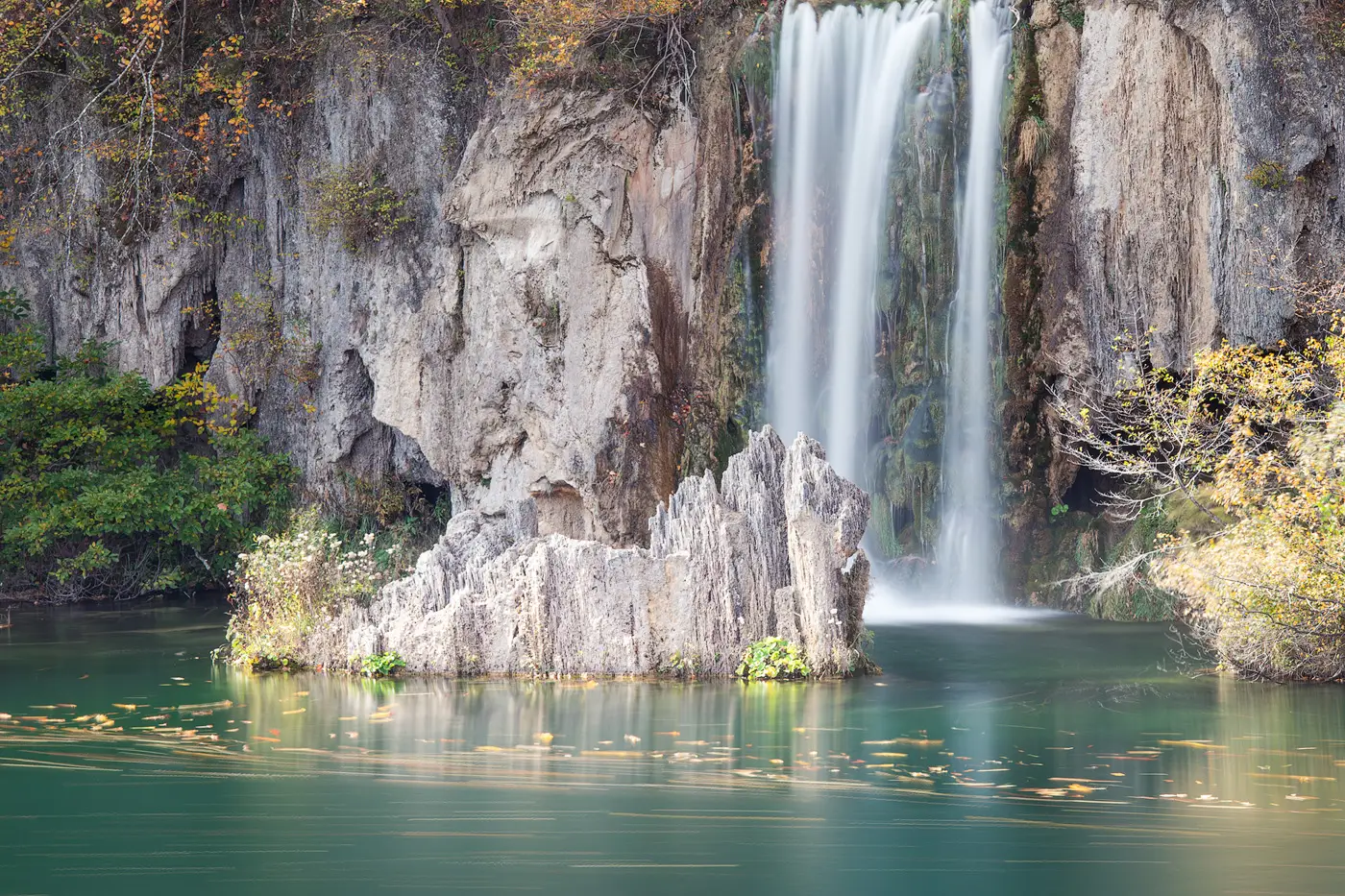
Circular polarizer: the most versatile filter here
A CPL can remove distracting glare from wet leaves, darken reflective rock surfaces and reveal detail below clear water. But if a lake reflection forms the subject, the filter may reduce the feature you are trying to photograph. Rotate it while watching the scene rather than assuming the strongest effect is always best. Ultra-wide lenses may show uneven polarizing effects under certain skies.
Neutral-density filters: useful, not mandatory
A 3-stop or 6-stop ND filter can help maintain a slower shutter speed in bright conditions, particularly for mid-sized cascades. Yet an ND filter is not a substitute for good light or composition. In shade, the polarizer alone may already reduce the light enough. Make a test exposure before stacking filters and unnecessarily complicating the workflow.
Tripods on boardwalks
A compact tripod can be useful for carefully made long exposures when space is available. But many routes include narrow walkways and other visitors. Wooden boards can vibrate when people pass, and setting legs across the path creates a hazard. If a stable tripod position is unavailable, use a faster shutter, stabilization or a different composition. Never block the route to complete a long exposure.
Long exposure versus bracketing versus focus stacking
These techniques solve different problems. Long exposure changes the appearance of moving water. Exposure bracketing captures different brightness levels when contrast exceeds what one RAW can retain. Focus stacking combines different focus distances when foreground and background cannot both be sharp. Do not use a more complex technique unless the scene actually needs it.
Photographing Beyond the Postcard View
Plitvice rewards photographers who allow the landscape to become quieter. The obvious scenes deserve attention, but forest reflections, a single branch over dark water, repeating mossy terraces and subtle colour relationships can be just as rewarding. The most useful photographic decision is often to wait for the scene to simplify rather than adding another lens or longer exposure.
For this reason, try a simple exercise: after making the familiar wide photograph, turn around and create one frame using only a small group of elements. It might be a cascade, a tree and a patch of turquoise water. The aim is not to hide the fact that you are at Plitvice, but to make a more intentional photograph of a landscape that is easily overwhelming.
Plitvice Lakes Photography FAQ
Which entrance is best for photographers?
Entrance 1 is convenient for the Lower Lakes, the canyon and Veliki Slap. Entrance 2 is useful for Upper Lakes programmes when those routes are available. Choose based on the photographs you want, not simply which car park appears closer on a map.
How long do I need for photography at Plitvice?
A half-day can cover one main area. A full day can cover both sections via programmes C or H. Two visits offer more freedom to concentrate on composition, changing light and possible weather changes.
Can I photograph the park at sunrise?
Only during the park’s permitted opening hours. Astronomical sunrise can occur before the entrances open. Check the actual opening time and first admission slot rather than planning to enter early.
Is autumn the best time?
Autumn is especially attractive for colour and atmosphere, while spring can be excellent for water flow and fresh foliage. The ideal visit depends on weather, access, crowd levels and the photographs you want to make.
Is a tripod allowed?
The park’s general rules do not state a blanket ban on ordinary tripods, but photography must not obstruct other visitors or cause damage. On narrow, vibrating boardwalks a tripod may be impractical. Confirm any special restrictions for organised or commercial photography.
Can I fly a drone?
No. The park’s official rules prohibit remotely controlled aircraft used for aerial filming. Do not rely on a general national drone rule to override the park’s restrictions.
Can I swim or step into the water for a photograph?
No. Swimming is prohibited and visitors must stay on marked paths and boardwalks. Protecting the water and fragile natural barriers is part of the photographic responsibility here.
Should I buy tickets online?
Yes, advance purchase is advisable, especially in busy periods. Tickets are tied to a chosen entrance and time slot. Review current availability and opening hours on the park’s ticket website before visiting.
Are the Upper Lakes accessible in winter?
Often not. According to the park, Upper Lakes routes are usually closed in winter and reopening depends on weather. Check the park’s current alerts before departure.
Can I combine Plitvice with photography in Slovenia?
Yes, it can form a valuable second destination on a carefully planned Slovenia and Croatia journey, especially for photographers interested in waterfalls, forests and autumn colour. Allocate proper time at Plitvice rather than treating the park as a rushed roadside stop. Continue with our Slovenia photography guide for locations and travel planning north of the border.
Leave Time to Photograph
Plitvice Lakes is one of those places where preparation makes the creative experience easier. Know which entrance you are using, choose a route that matches your time, understand how transport and opening hours work, and be prepared to adapt when light, water or weather changes.
Then slow down. There is no need to photograph every waterfall. A few carefully observed compositions, made without rushing or compromising the park’s fragile environment, can tell a stronger story than hundreds of hurried photographs.
Explore with OutdoorPhotoDream
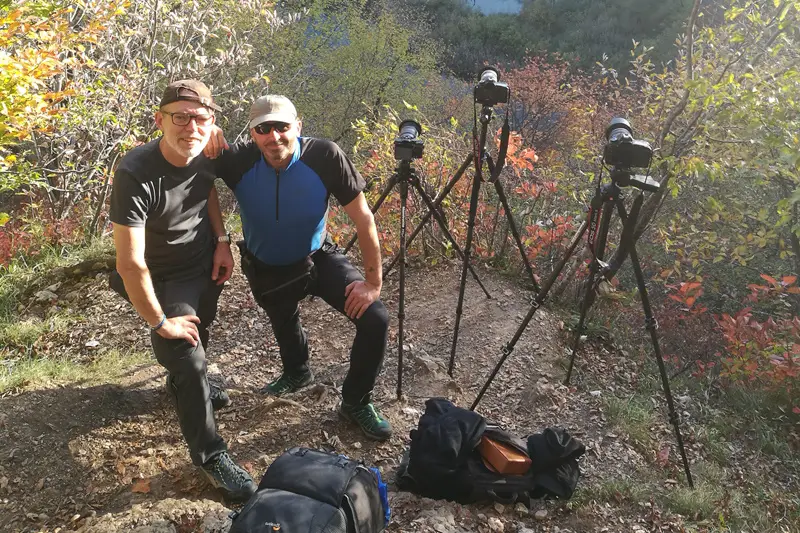
Group Photography Tours
Slovenia & Croatia Autumn Photography Tour
Discover autumn landscapes in Slovenia and Croatia, from misty alpine lakes to Plitvice’s wooded cascades.
Explore Photo Tour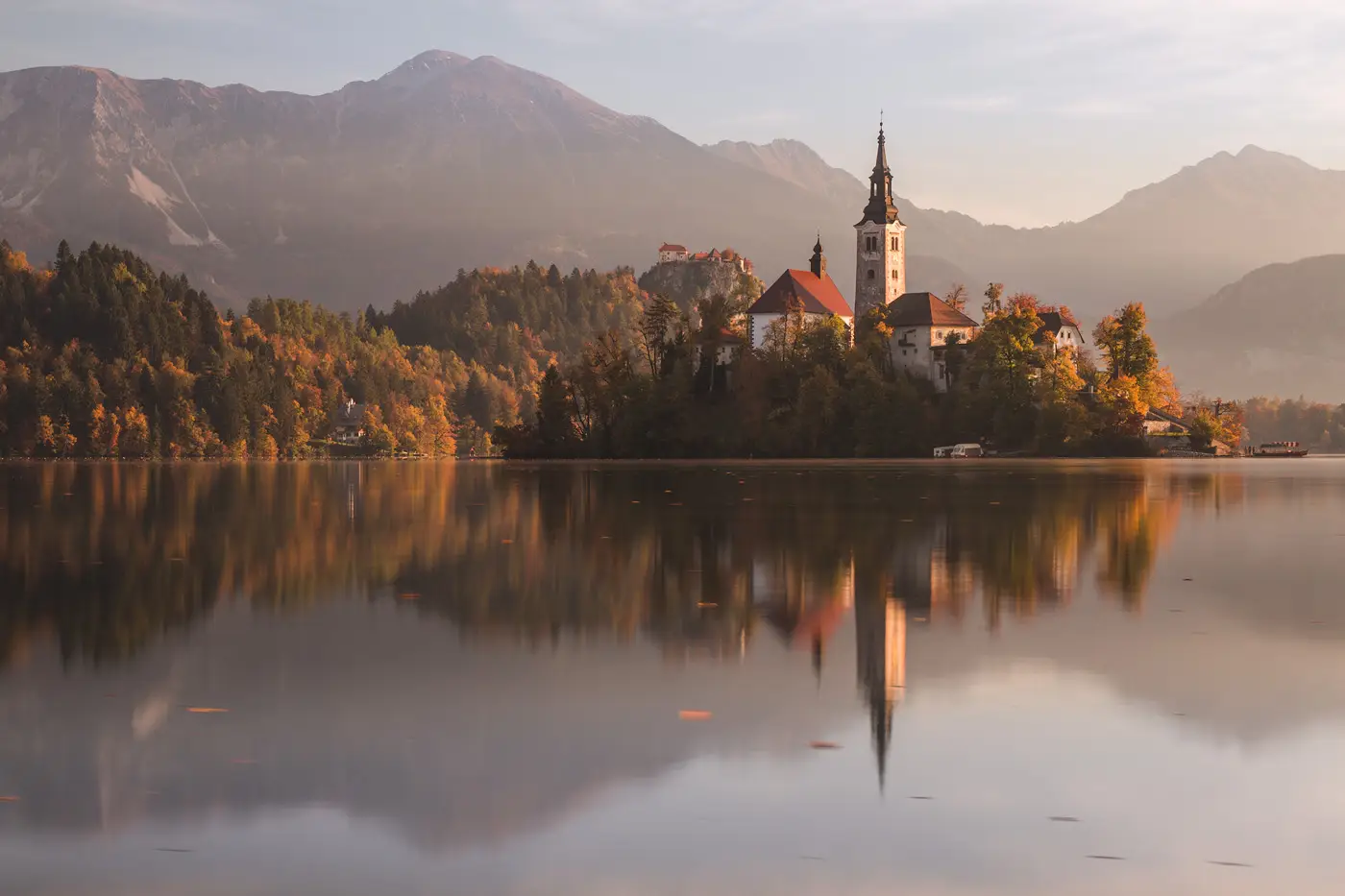
Private Tours
Private Slovenia Photography Tour
Continue into Slovenia on a private multi-day photography journey shaped around the locations and subjects you want to explore.
Explore Private Tour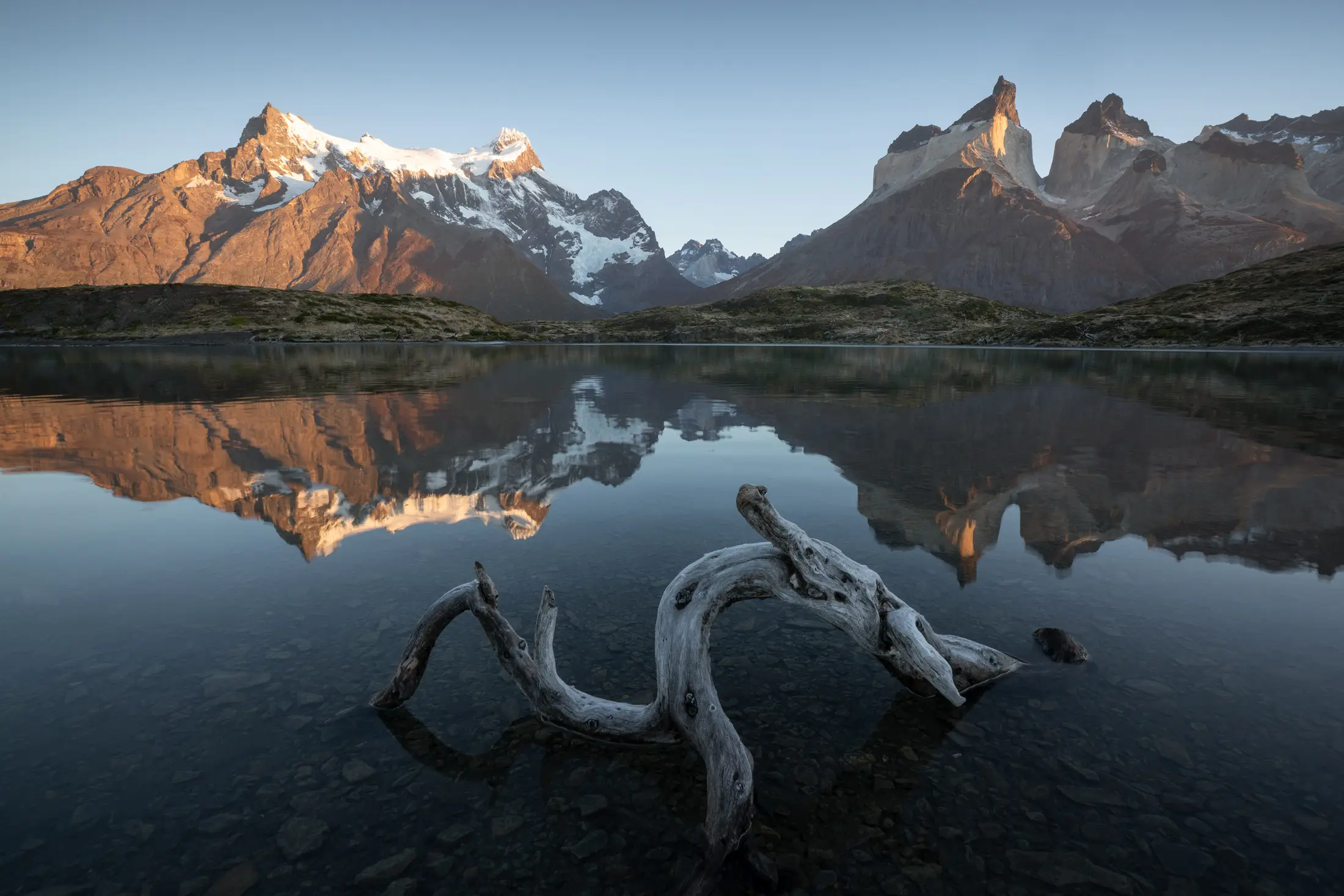
Group Departures
All Photography Tours
Browse small-group photographic journeys in Europe and beyond.
Explore All Photo Tours
About the author
Federico Antonello
Related Field Notes

Best Photography Locations in Slovenia: A Practical Landscape Photographer’s Guide
Explore 18 photography locations across Slovenia, with regional itineraries, walking and access information, seasonal light and advice for planning a photography trip.
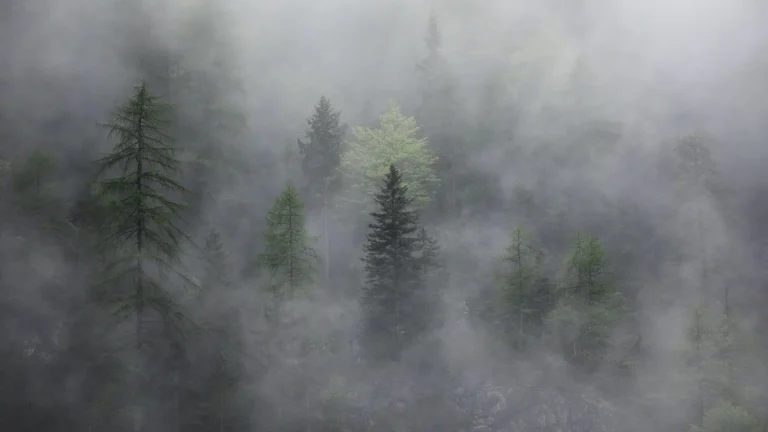
Forest Photography: Finding Mood and Atmosphere Among Trees
Discover how to create mood, depth and atmosphere in forest photography. Learn to work with light, weather and composition to capture the magic of woodland landscapes.

Minimalist Landscape Photography: How to Create Powerful Images with Less
Simplify complex landscapes with negative space, subject isolation and deliberate framing, with practical camera settings and exercises to try in the field.


